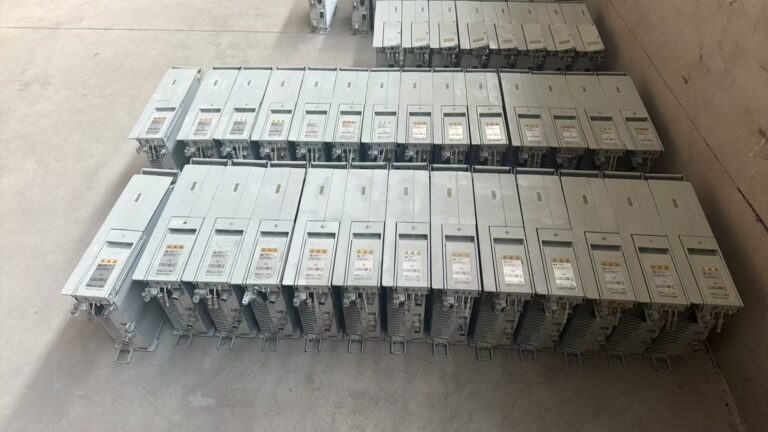

Huawei BBU Buying Guide for Telecom Spare Parts
Many buyers search for Huawei BBU, but they still feel lost. A wrong unit can waste money, delay sites, and create painful compatibility problems[1].
A Huawei BBU is the baseband unit in a mobile base station. It processes radio signals, connects RRU or AAU units, and links the site to the core network[2]. For buyers, the key is choosing the right model, board configuration, software status, and condition.
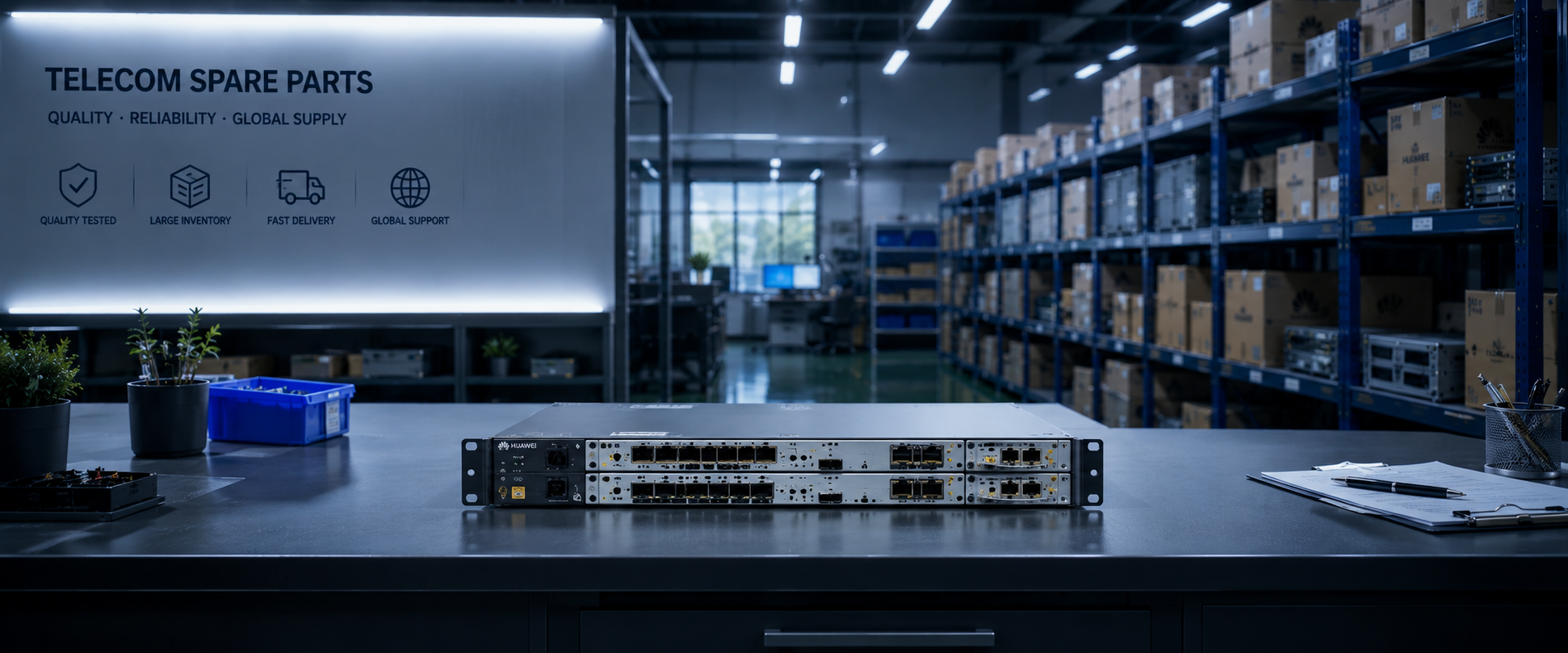
I have sold and sourced telecom spare parts for many years. I have seen one simple question create many wrong purchases. “What is Huawei BBU?” sounds like a technical question. In real trade, it is also a buying question[3]. I do not only look at the name on the label. I look at the network generation, board cards, licenses, test status, warranty, and delivery risk[4]. That is where a buyer can save money or lose money.
What Does a Huawei BBU Actually Do?
Many people think a BBU is just one box[5]. That thought can create trouble because the wrong box may not work with the buyer’s RRU, AAU, or network plan[6].
A Huawei BBU is the baseband processing part of a base station. I use it to connect radio units, process baseband signals, manage site functions, and send traffic toward the transport and core network[2].
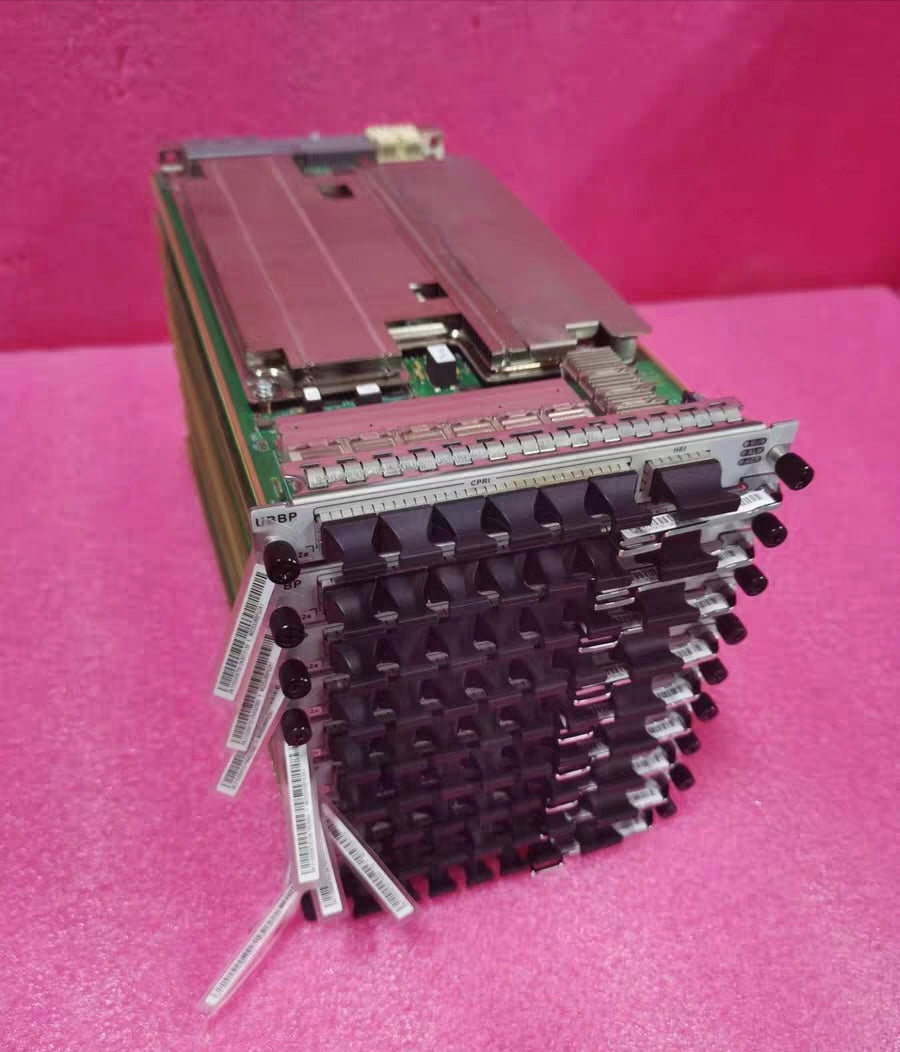
I usually explain a Huawei BBU as the “brain and processing center” of a radio site[7]. The antenna and RRU handle the radio side. The BBU handles baseband processing, site control, transmission, and service support. This sounds simple, but the buying decision is not simple.
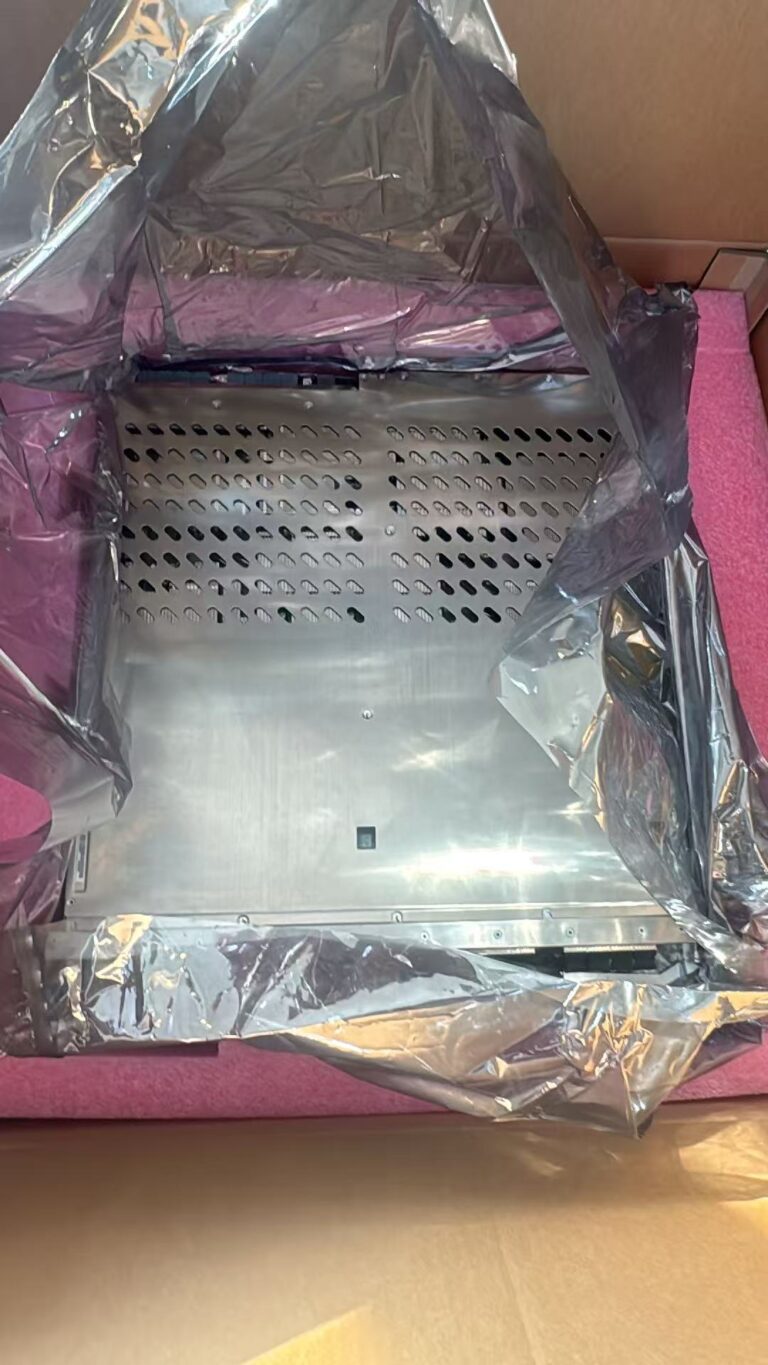
A buyer should not treat the BBU as only a metal chassis. A Huawei BBU works through different boards inside the platform. These boards decide what the unit can support[8]. The same BBU family can have different value when the board configuration is different[9].
| Part I Check | What It Means for the Buyer |
|---|---|
| Subrack or chassis | It holds the BBU system and boards |
| Main control board | It controls the site and system functions |
| Baseband board | It decides capacity, radio support, and service ability |
| Transmission board | It connects the site to transport equipment |
| Power and fan parts | They keep the unit stable in real operation |
When I receive a buyer’s request, I do not stop at “Huawei BBU.” I ask which network the buyer wants to support. I ask which RRU or AAU is already used. I ask whether the buyer needs 3G, 4G, 5G, or a mixed site[10]. This basic checking prevents many mistakes before money is paid[4].
Why Is a Huawei BBU Not Just One Product?
A buyer may search one model and think the job is finished. I have seen this many times[6]. The model name is only the start, not the final answer[8].
A Huawei BBU is a modular platform. The real capability comes from the installed boards, software, licenses, and matching radio equipment[9]. Two units with the same model name may support different capacity and network functions[9].
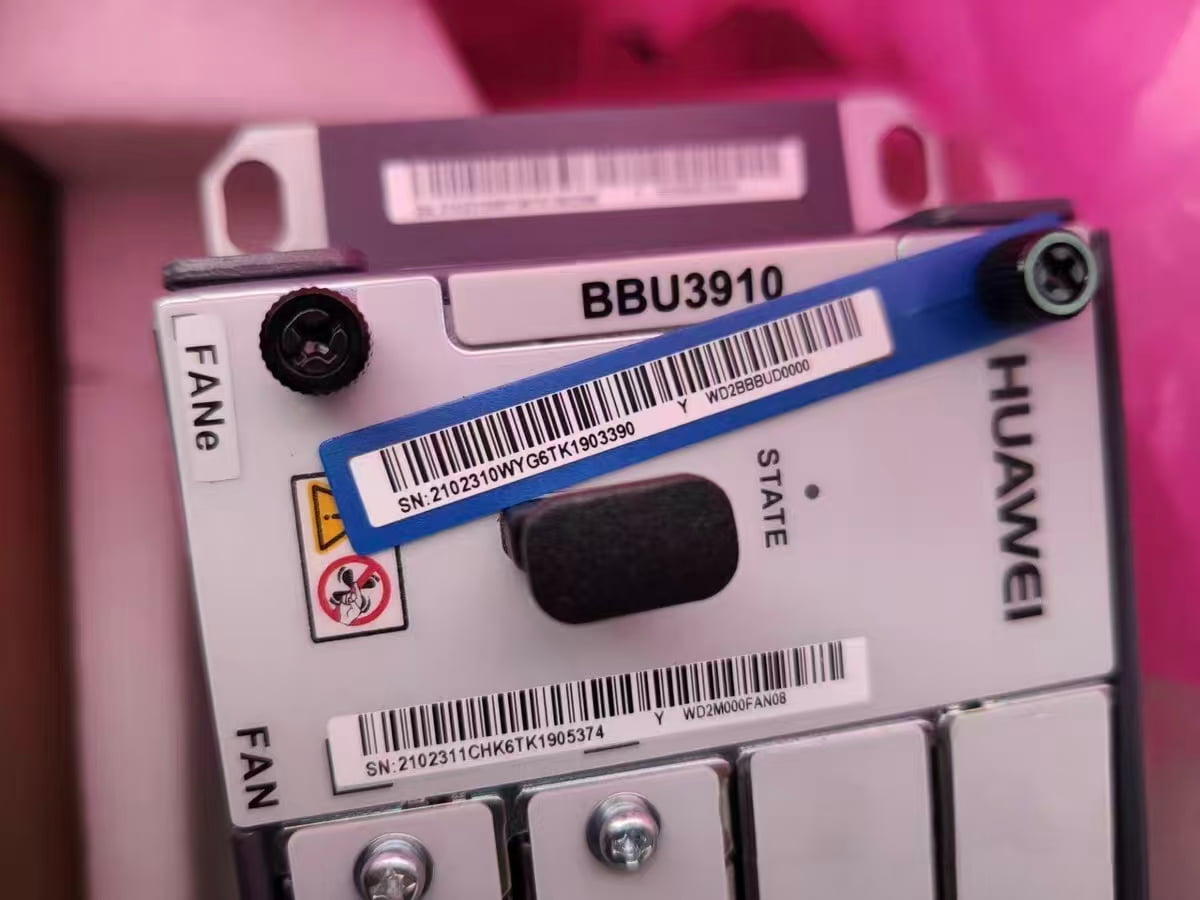
I often tell buyers that a BBU is more like a configured system than a single fixed product[7]. The label can show one family or model. The inside board cards decide the real use. This is very important in the used and refurbished market[4].
For example, one buyer may need a BBU for a small 4G site. Another buyer may need a higher capacity site with more carriers or more sectors. Both buyers may talk about a Huawei BBU, but they do not need the same configuration. If they buy only by model name, they may receive a unit that is physically correct but not operationally correct.
| Buyer Question | Why I Ask It |
|---|---|
| Which generation do you need? | 3G, 4G, and 5G may need different boards |
| Which RRU or AAU will connect? | The BBU must match the radio side |
| How many sectors and cells? | Capacity decides board selection |
| Which transmission interface is needed? | Transport must fit the site plan |
| Do you need licenses? | Missing licenses can stop real use |
This is why I do not like generic quotations. A cheap offer can look attractive. Then the buyer finds that one board is missing, one license is not active, or the software does not match the existing network. At that moment, the low price becomes expensive[11].
How Should I Choose the Right Huawei BBU Model?
Many buyers ask for a popular model first. I understand this habit. But a popular model is not always the right model for the network[12].
I choose a Huawei BBU model by checking the target network, existing equipment, required capacity, site plan, budget, and future upgrade needs. The best choice is the unit that fits the real network, not the cheapest listing[12].
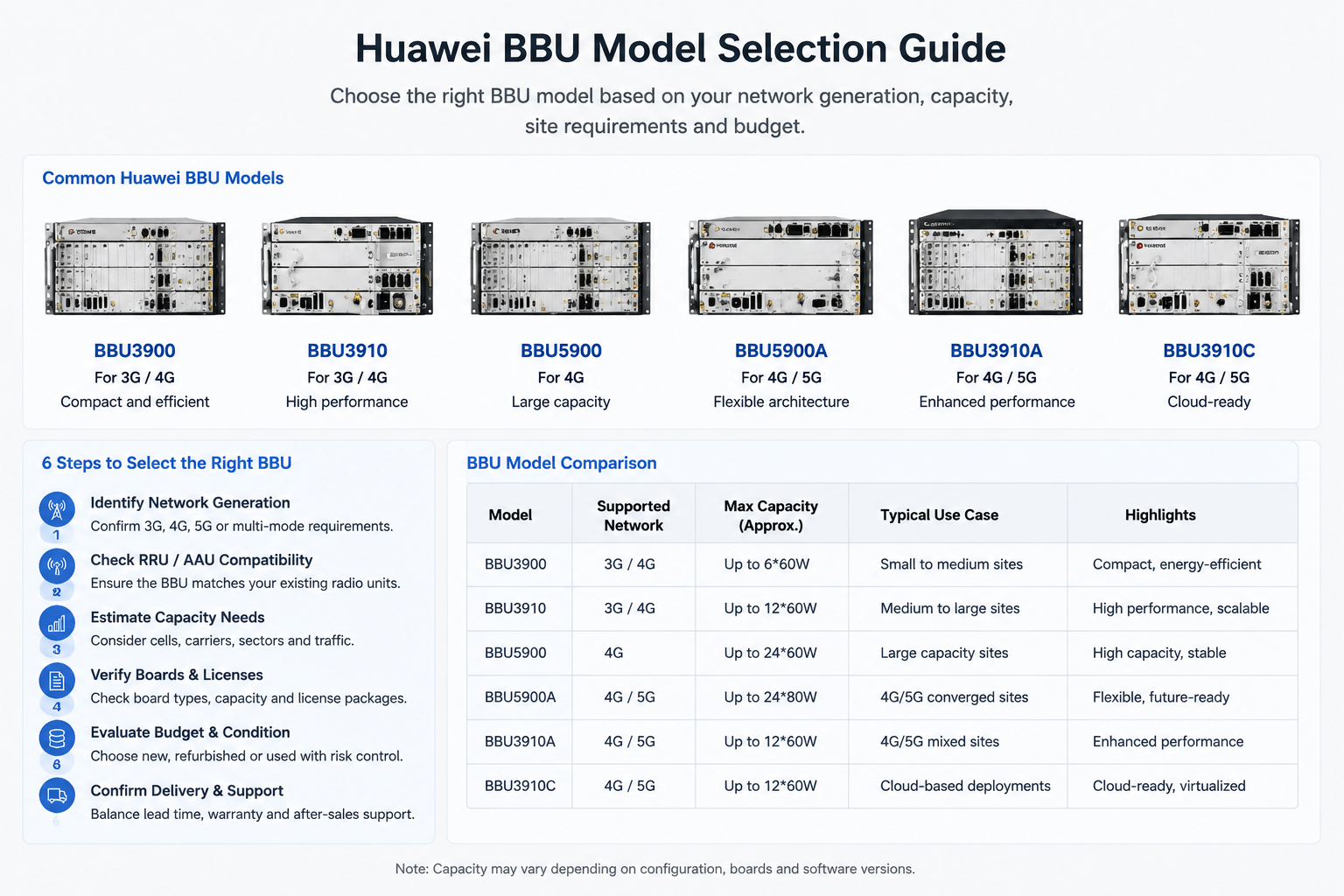
In my work, I first separate technical need from buying wish. A buyer may say, “I want one Huawei BBU.” I then ask what the BBU must do. This step is simple, but it is where many problems are avoided[4].
If the buyer is expanding an existing 4G network, I check the current Huawei equipment. I want to know the BBU family, RRU model, board type, and software environment[9]. If the buyer is building a mixed site, I check whether the BBU must support more than one generation[10]. If the buyer has a strict budget, I may compare refurbished and used options, but I still keep the configuration correct[11].
| Decision Point | Good Buying Logic |
|---|---|
| Existing network | Match the installed system first |
| Radio units | Confirm RRU or AAU compatibility |
| Capacity | Estimate cells, carriers, and traffic need |
| Budget | Choose new, refurbished, or used with risk control |
| Spare plan | Keep extra boards for future repair |
| Delivery time | Balance price with available stock |
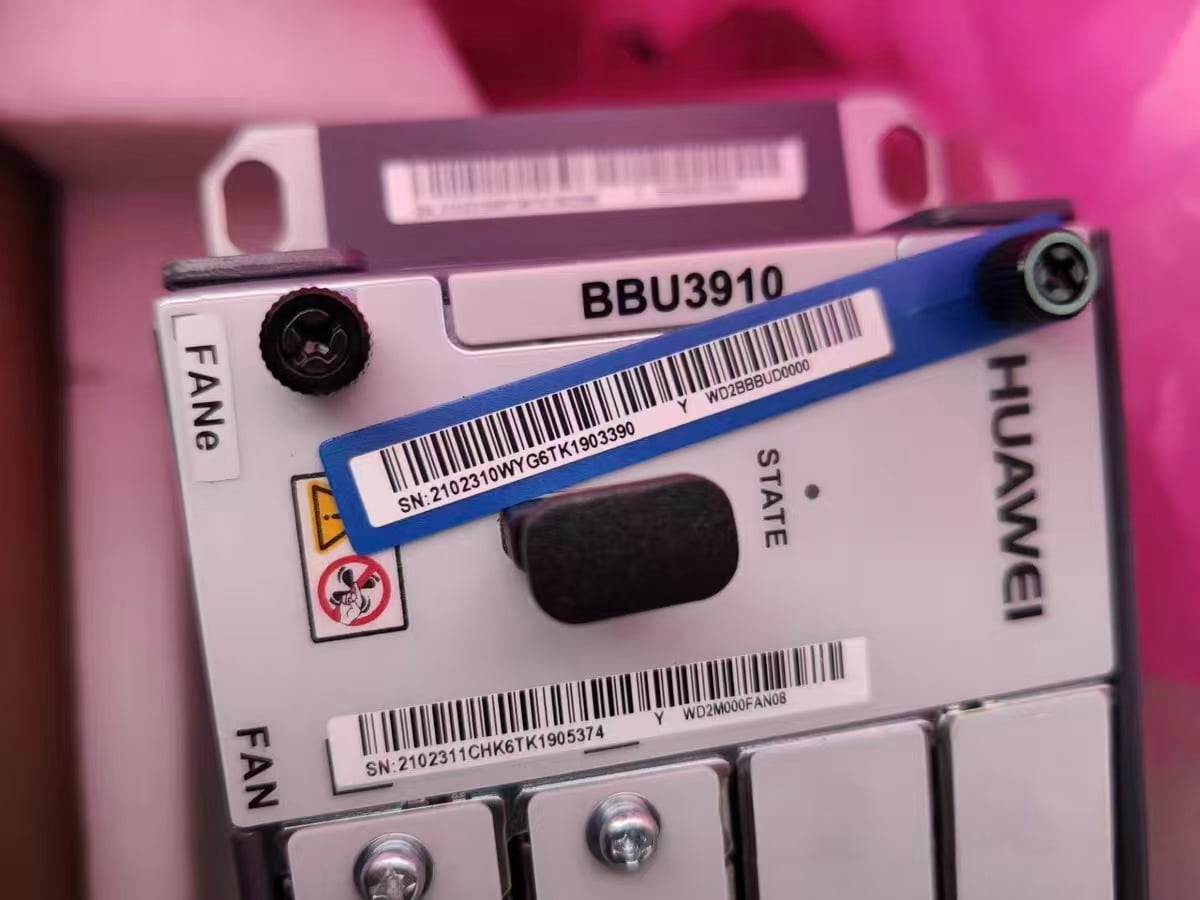
I also ask buyers to send photos, part numbers, board labels, and current configuration if possible[4]. A clear photo can reduce many misunderstandings. In telecom spare parts, one letter or one board version can matter. I do not want the buyer to discover that problem after customs clearance[12].
Should I Buy New, Refurbished, or Used Huawei BBU?
A low price can look safe on paper. I have seen buyers choose the cheapest used BBU and then spend more time solving locks, missing parts, or unstable performance[11].
New, refurbished, and used Huawei BBUs each have different cost and risk[11]. I choose the condition based on budget, required lifespan, test results, warranty, license status, and the importance of the site[11].
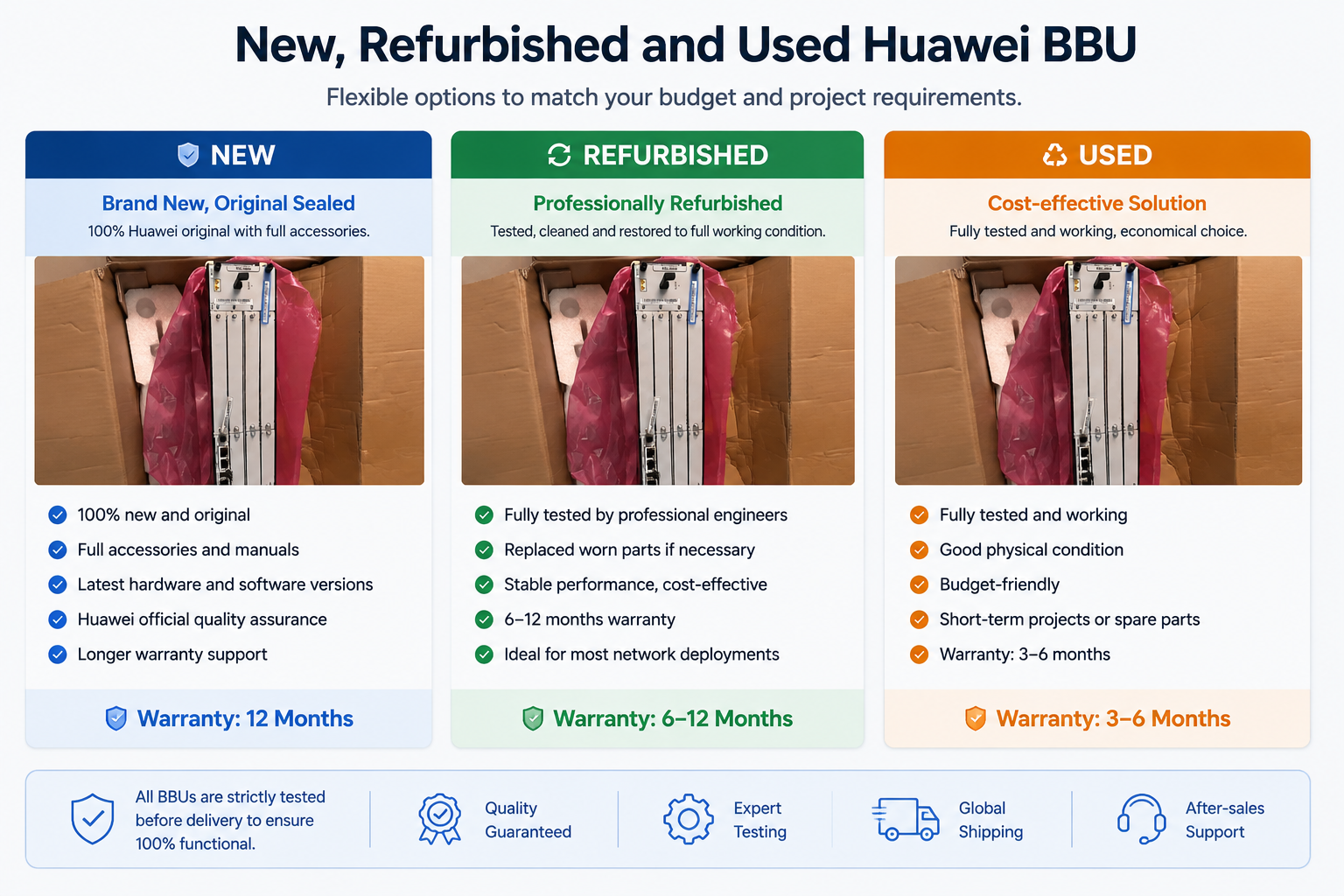
I treat condition as one of the biggest buying risks. New equipment is usually the safest, but it also costs more and may not always be easy to source. Refurbished equipment can be a good middle choice when the supplier has tested it well. Used equipment can save money, but the buyer must control risk carefully[11].
A used Huawei BBU may look clean outside. That does not prove it is ready for network use[12]. I need to know whether the boards are tested, whether the unit powers on, whether alarms exist, and whether the configuration matches the buyer’s need[12]. I also pay attention to software and license questions because these issues can be more serious than the hardware price[12].
| Condition | Main Advantage | Main Risk | What I Check |
|---|---|---|---|
| New | Long lifespan and clean status | Higher price and limited supply | Original status and correct PN |
| Refurbished | Better price with testing | Quality depends on supplier | Test report and replacement parts[11] |
| Used | Lowest cost | Locks, alarms, wear, missing licenses | Full function test and photos[12] |
I normally suggest that buyers do not choose condition only by price. I once discussed a purchase where the buyer wanted the lowest price for a rural expansion project. The low-cost option could work, but only after checking board status, matching power parts, and warranty terms[11]. This kind of checking is not extra work. It is the real work[4].
What Questions Should I Ask Before Buying Huawei BBU?
A buyer may think the supplier should know everything from one model number. That is not safe. A better question can prevent a wrong shipment[4].
Before buying a Huawei BBU, I ask about board configuration, supported network generation, RRU or AAU compatibility, license status, test results, software version, warranty, packing, and after-sales support[4].
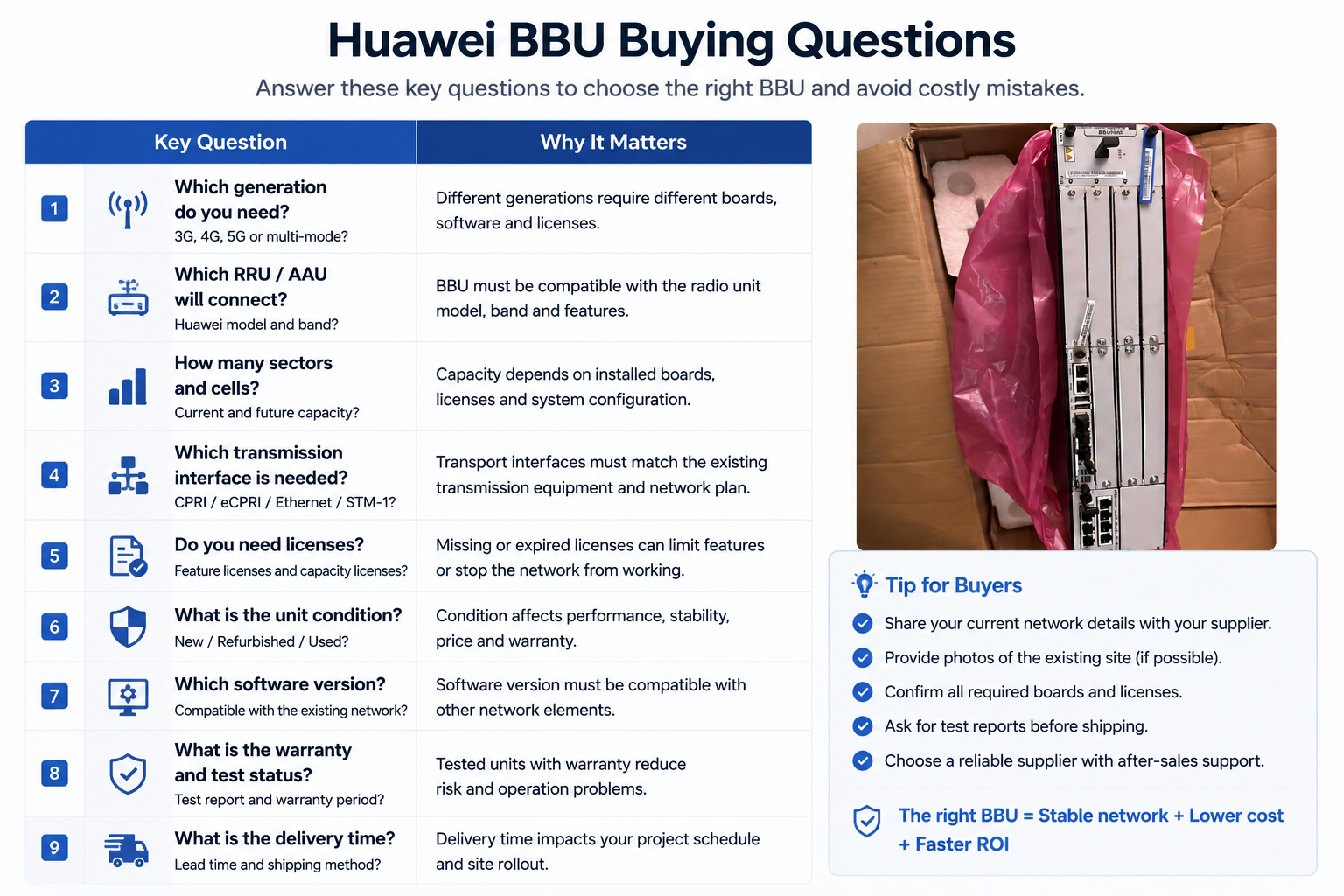
I like serious buyers because they ask direct and useful questions. A good buyer does not only ask, “How much?” A good buyer asks whether the unit will work in the planned network. This is better for both sides. It reduces dispute. It also saves time[4].
Here are the questions I would ask if I were buying a Huawei BBU for my own project[4].
| Question I Ask | What I Want to Confirm |
|---|---|
| What boards are included? | The BBU has the needed function and capacity |
| What is the exact PN or model? | The item matches the buyer’s system |
| Is the unit tested? | The supplier has checked real working status[4] |
| Are licenses included or needed? | The unit can support required services[4] |
| What software version is on it? | The unit can work with existing equipment[4] |
| What warranty is offered? | The supplier accepts responsibility after sale[11] |
| Can you provide photos or video? | The buyer can check labels and condition[12] |
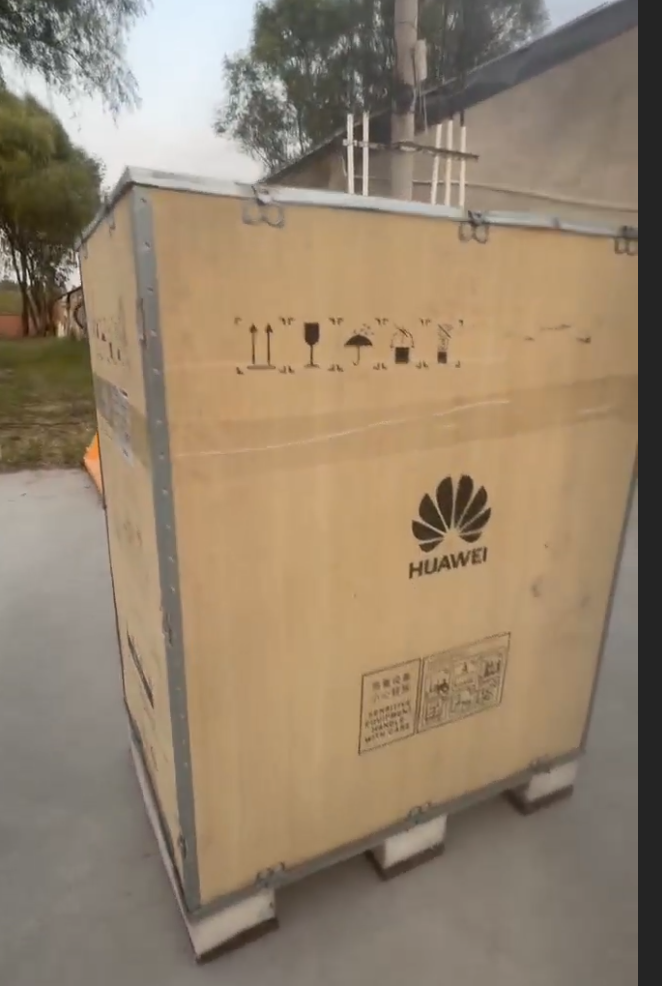
| How is it packed? | The unit can survive international shipping[12] |
I also like one very practical question: “Which board configuration do I need to support my planned number of cells and radio units?” This question is better than asking only for a model. It leads the supplier into real solution thinking. It also helps the buyer see whether the supplier understands the product or only copies stock lists[4].
How Can I Reduce Risk When Sourcing Huawei BBU Internationally?
International sourcing can save money, but it can also create problems[13]. A wrong BBU shipped across borders costs time, freight, customs fees, and trust[13].
I reduce Huawei BBU sourcing risk by confirming PN codes, board details, photos, test results, warranty terms, packing quality, delivery time, and supplier experience before payment and shipment[4][14].
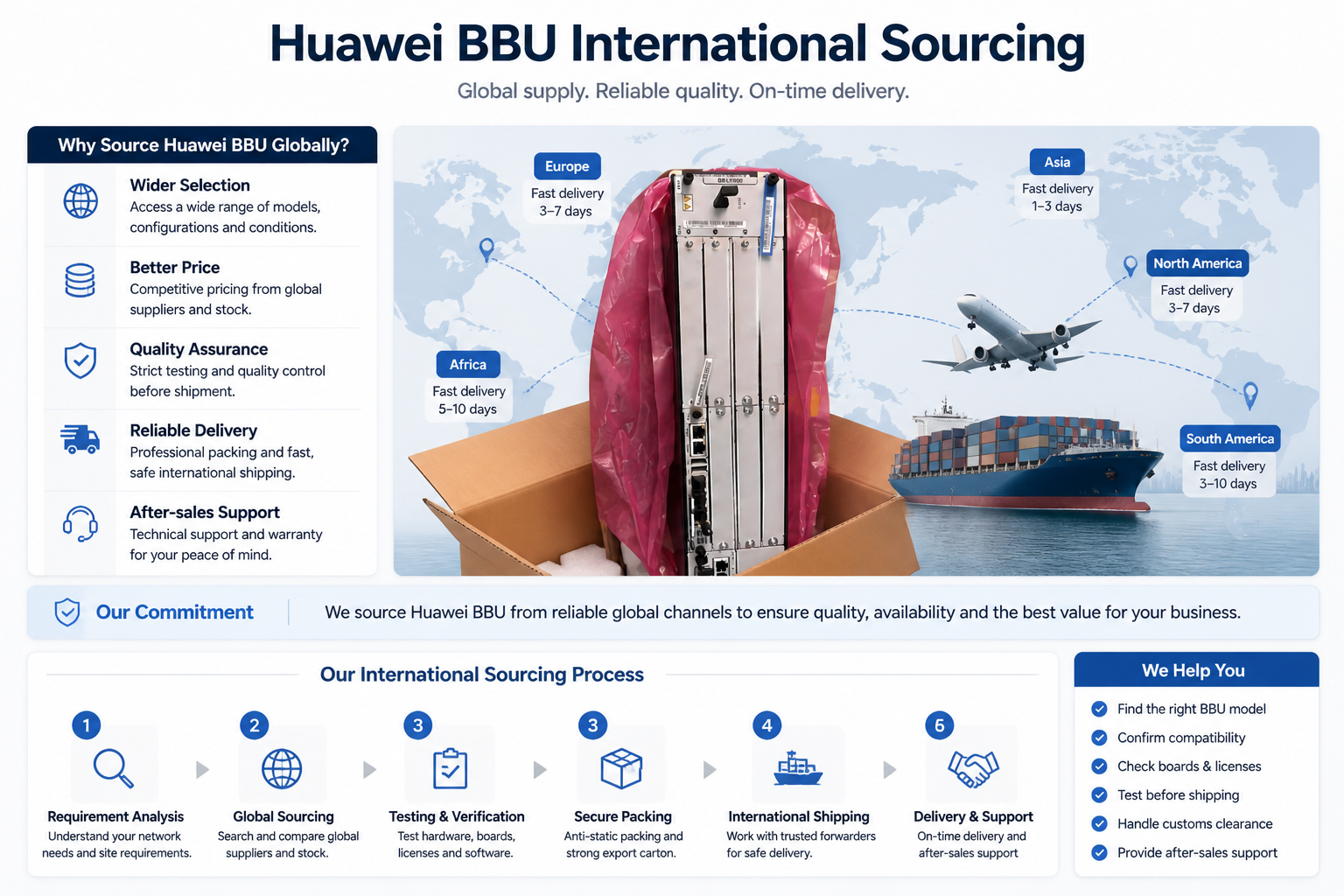
In my daily work, I see that risk control is not one single step. It is a chain. If one link is weak, the whole purchase becomes unstable[4]. The first link is product confirmation. The buyer should send the exact requirement, not only a short name. The supplier should confirm the model, PN, board cards, and condition[4].
The second link is testing. For telecom spare parts, a simple visual check is not enough. I prefer power-on tests, board status checks, and clear photo records[4]. For some products, the buyer may also need specific compatibility checks[4]. The third link is after-sales support. A warranty does not mean much if the supplier cannot answer technical questions after delivery[11].
| Risk Area | My Practical Control Method |
|---|---|
| Wrong model | Confirm model, PN, and board labels[4] |
| Hidden fault | Ask for test photos or test video[12] |
| Missing board | Check the full configuration list[4] |
| Software mismatch | Confirm version and network need[4] |
| Shipping damage | Use strong packing and clear marks[11] |
| No support | Agree on warranty and response process[11] |
| Delay | Check real stock before order[11] |
I am based in a market with strong telecom spare parts supply. This helps with price and delivery[14]. But I still do not believe in blind confidence. I believe in checking[4]. A good supplier should be willing to slow down for the right confirmation. Fast quotation is useful. Correct delivery is more useful[4].
Why Does Supplier Experience Matter for Huawei BBU Buying?
A buyer may compare only price sheets. I understand this because budgets are real. But supplier experience often decides whether the product becomes useful or becomes a problem[14].
Supplier experience matters because Huawei BBU buying needs product knowledge, market access, testing ability, condition control, and practical advice[14]. A reliable supplier helps the buyer avoid wrong models, missing boards, and weak after-sales support[14].
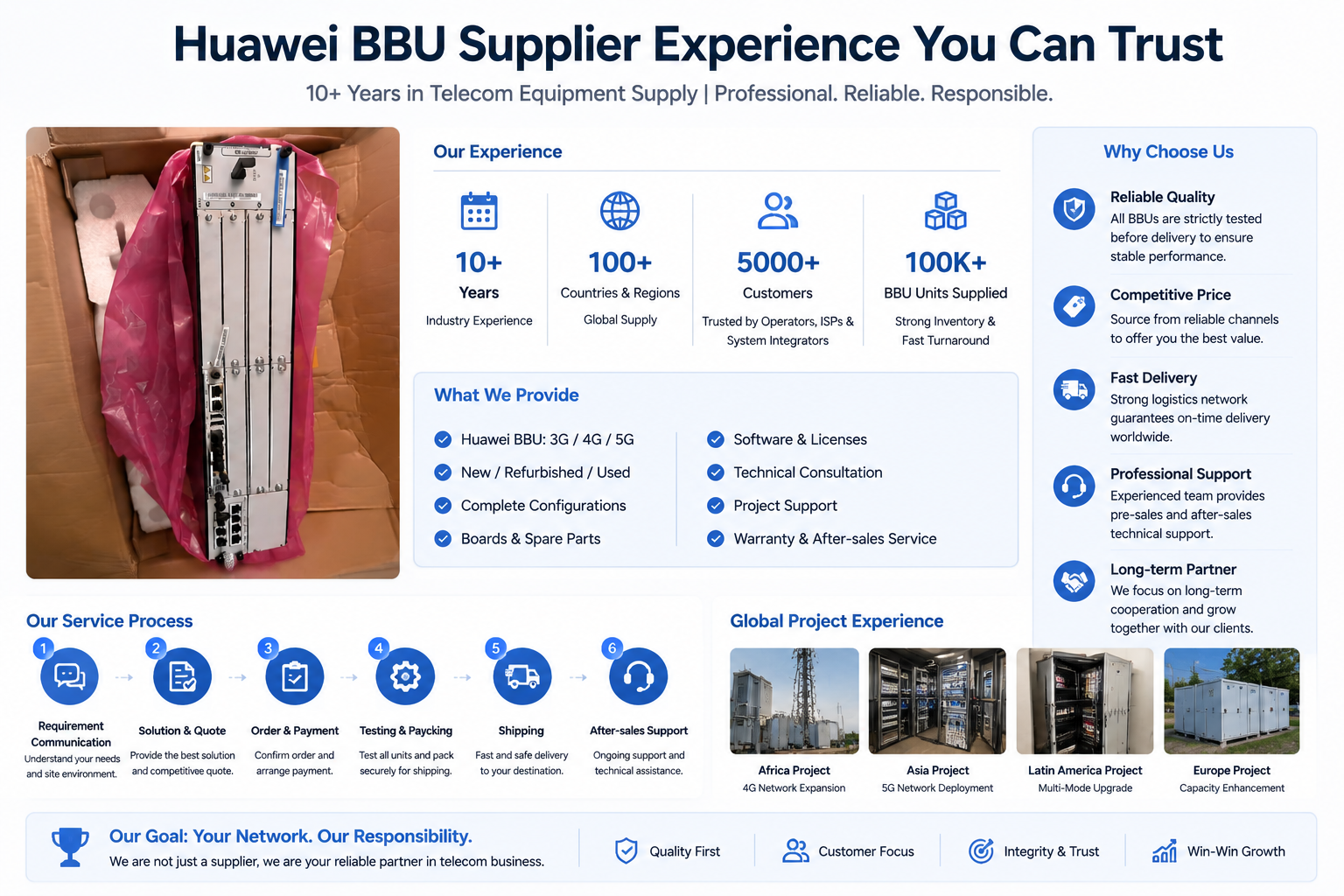
I have worked in telecom spare parts trade for many years, and I learned one thing early. The product name is not enough. The real value is in judgment. A supplier must know how to read a buyer’s need, how to check stock, how to identify board differences, and how to explain risk in simple words[3].
For Huawei BBU, supplier experience matters more in the refurbished and used market[14]. New items are more direct, although they still need PN checking[11]. Used items need stronger control[12]. A supplier must know where the stock comes from, how it was removed, whether it was stored well, and whether it can pass basic tests[12].
| Supplier Ability | Why It Helps the Buyer |
|---|---|
| Product matching | It reduces wrong model risk[4] |
| Stock network | It improves price and delivery time[14] |
| Testing team | It reduces hidden hardware risk[12] |
| Technical advice | It helps select the right configuration[4] |
| Warranty process | It protects the buyer after shipment[11] |
| Export experience | It reduces packing and shipping mistakes[13] |
I do not pretend to be a Huawei R&D engineer. My value is different. I stand in the market, sourcing, testing, and delivery side[3]. I help buyers connect their technical need with real available stock[14]. This is where many international buyers need support[4]. They may know the network plan, but they still need a supplier who can turn that plan into the correct spare parts order[4].
Conclusion
I see Huawei BBU buying as a configuration decision, not a simple definition. The right model, boards, condition, and supplier protect the whole project[14].
References
[1] LinkedIn – BBU Buyer Confusion
[2] Huawei BBU Technical Specifications
[3] Author’s personal experience / trade insights
[4] Telecom Easy – Proper Refurbishment & Testing
[5] Huawei BBU Modular Platform Overview
[6] Personal observations – market experience
[7] Conceptual explanation – BBU as “brain of site”
[8] PDF Coffee – BBU Configuration Impact
[9] Huawei BBU Specs – board modules and performance
[10] Buyer check questions – common industry practice
[11] Wikipedia – Electronics Refurbishment
[12] Axis Tele Solutions – Refurbished Equipment QC
[13] ECFR – International Trade Risk
[14] Practical sourcing insights and industry standards