
How to Choose the Best Huawei OSN Board for Long-Haul Networks in Emerging Markets
Many buyers lose time and money when they choose Huawei OSN boards only by speed. The board looks right, but the network refuses it.
The best Huawei OSN transmission board is the one that matches your OSN chassis, traffic demand, distance, software, power, and budget. In emerging markets, I usually guide buyers toward reliable, compatible, and cost-effective OSN boards instead of the newest or highest-rate option.
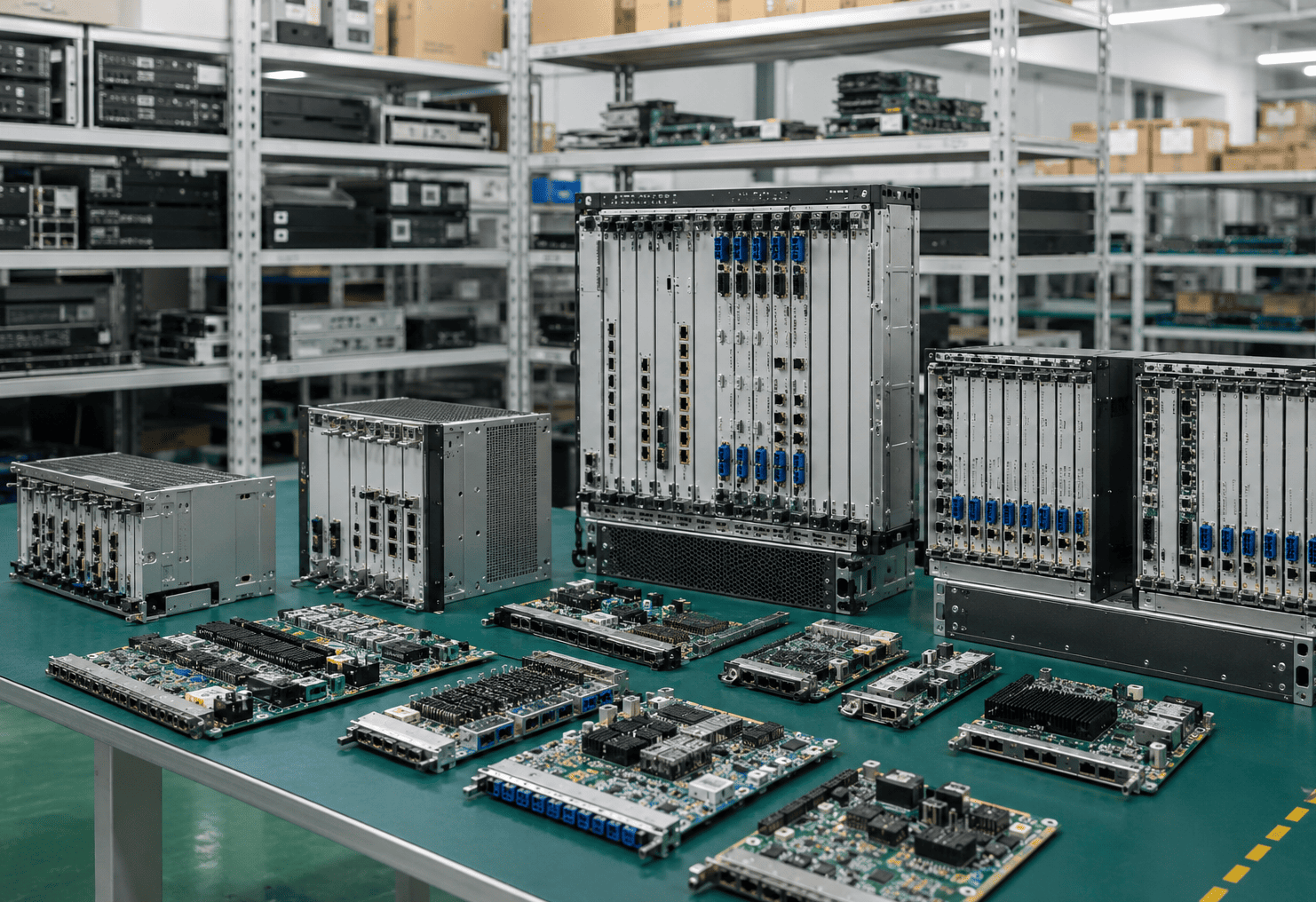
I often receive the same question from buyers in Africa, the Middle East, Central Asia, and South America. They ask me which Huawei OSN board is the best for long-haul transmission. I understand the question. Long-haul networks carry important traffic. A wrong board can stop a project, delay a site, and create extra cost. But I usually tell them that the better question is this: which Huawei OSN board is best for your real network?
A long-haul network in an emerging market often has a special target. The buyer wants stable service. The buyer wants enough capacity. The buyer also wants a price that makes sense. In many projects, the newest board is not the best board. The most powerful board is not always the right board. A board that fits the chassis, works with the software, supports the route, and can be delivered fast may be much better.
Why Is There No Single Best Huawei OSN Board?
A buyer may feel safe when a supplier says one model is the best. But that simple answer can hide serious compatibility risk.
There is no single best Huawei OSN board because each project has different distance, capacity, chassis, slot, optical module, software, and budget needs. I select OSN boards by matching the board to the live network, not by choosing the highest transmission rate.
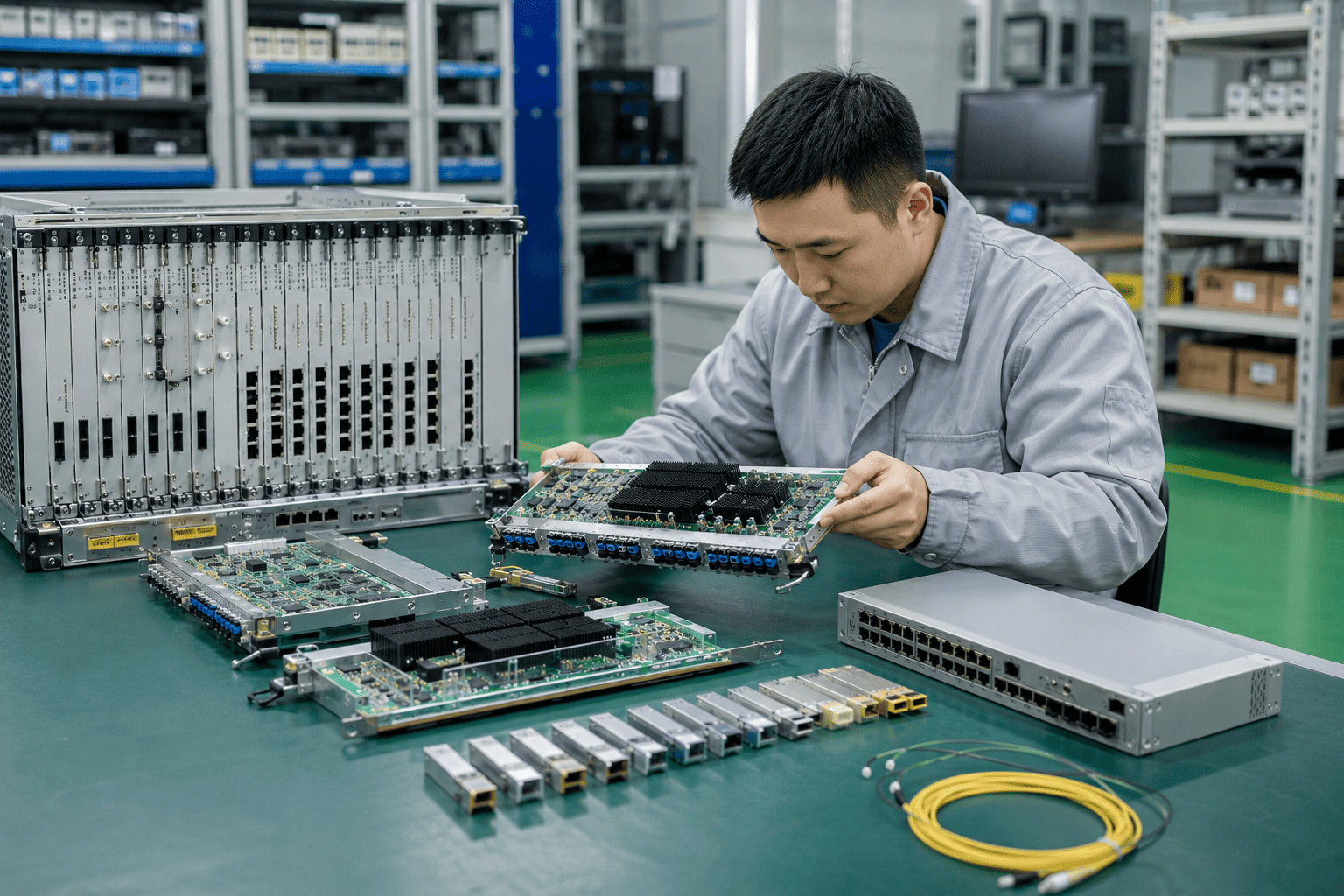
In my daily work, I see that Huawei OSN transmission boards are not like simple plug-and-play accessories. They are part of a full system. The same board may work well in one OSN 6800 network but may not fit another system because of shelf type, subrack version, software version, slot mapping, license status, or power design. This is why I never judge a board only by the model name.
I usually start with the network scene. I ask if the project is a new build, an expansion, or an emergency replacement. I also ask about the existing OSN platform, route distance, traffic plan, and available fiber. These details quickly change the recommendation.
| Selection point | Why I check it | Common buyer risk |
|---|---|---|
| OSN chassis model | The board must fit the platform | Buyer orders a board for the wrong OSN series |
| Slot compatibility | Some boards need specific slots | Board arrives but cannot be installed |
| Transmission distance | Long routes need correct optics and design | Signal quality becomes unstable |
| Capacity demand | Capacity must match real traffic | Buyer pays for unused performance |
| Software and license | Some functions need support | Board is installed but key features fail |
| Budget and delivery time | Emerging markets often need fast stock | Project waits too long for new parts |
A common question I receive is about 100G, 200G, and 400G boards. Many buyers think a higher number means a better decision. I do not agree. For example, the OptiX OSN 6800 is described as a platform used for long-haul backbone, area backbone, local networks, and metro convergence/core layers, but the actual board choice still depends on services, slots, optical design, and system configuration. If the live network only needs 10G or 40G expansion, a high-rate board may be expensive overkill. If the chassis cannot support it, the board becomes useless. This is not a technical failure only. It is a procurement failure. The team bought something that looked strong on paper but did not fit the actual system.
How Should I Start Selecting a Huawei OSN Board?
Many buyers start with a part number, but they miss the network story behind that number. That creates confusion and wrong quotations.
I start Huawei OSN board selection by checking whether the project is greenfield, upgrade, replacement, or capacity expansion. Then I match the chassis, route, traffic forecast, wavelength plan, optical interface, and budget before I discuss exact board models.
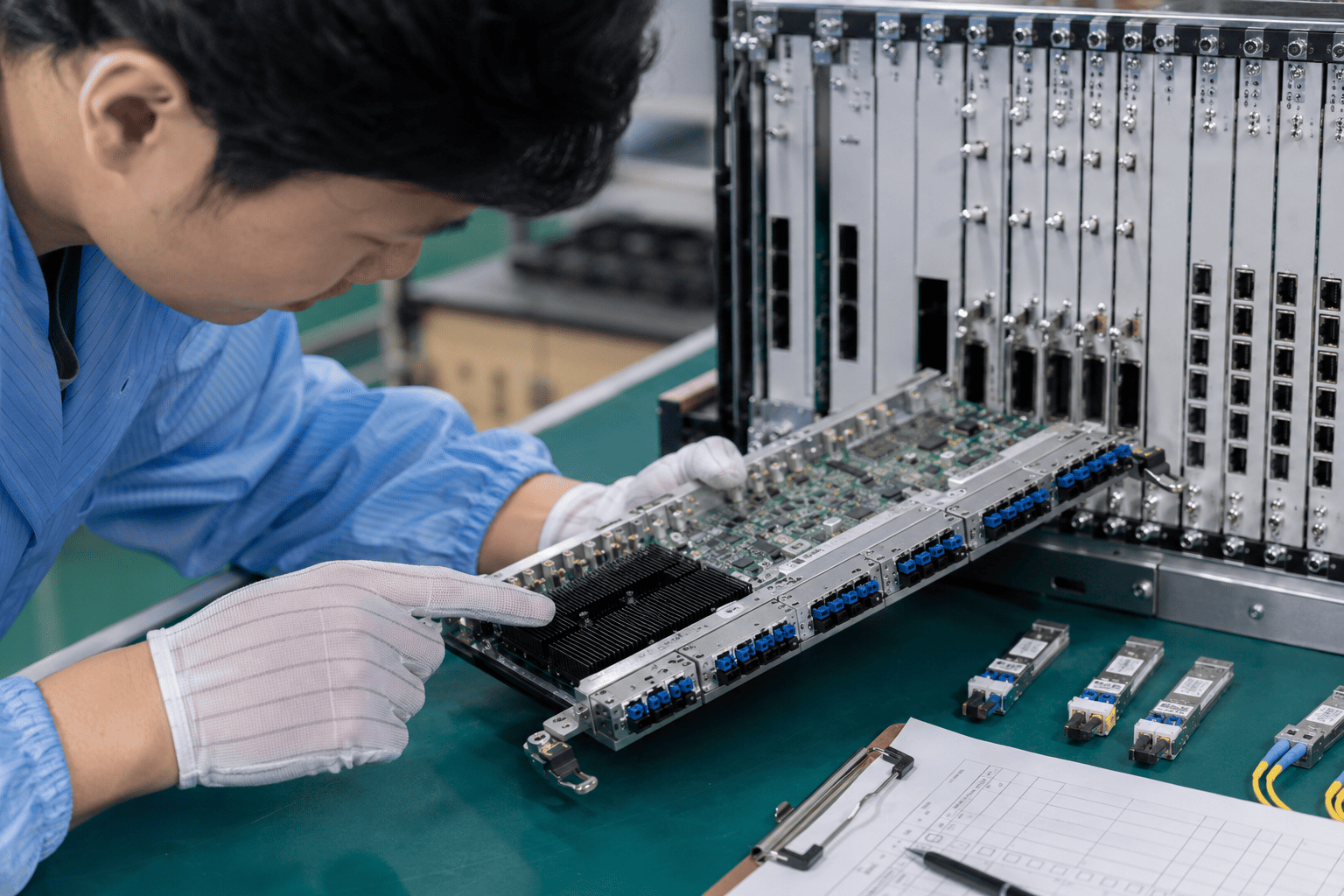
Here is the simple framework I use when I help customers avoid costly mistakes. I first separate the request into one of four scenarios. This step makes the whole process easier. A new network has more freedom. An upgrade project has more limits. A replacement case must match the old board closely. A capacity expansion must protect current services and future growth.
| Scenario | Main question I ask | Better buying direction |
|---|---|---|
| New network | What capacity will you need in 1 to 3 years? | Choose a stable platform and scalable board plan |
| Upgrade | What old chassis and software are in service? | Match new boards with the existing system |
| Emergency replacement | What exact PN and software are running now? | Use the same or fully compatible board |
| Capacity expansion | Which route is congested now? | Add capacity without unnecessary overbuild |
After I know the scenario, I check the route. Long-haul optical transmission is not only about board capacity. It is also about optical power, dispersion, amplification, wavelength plan, and fiber condition. In some long-haul projects, especially on older or remote routes, fiber condition, attenuation, power stability, and maintenance access should be checked carefully. In these cases, reliability and easy replacement can be more important than the newest feature.
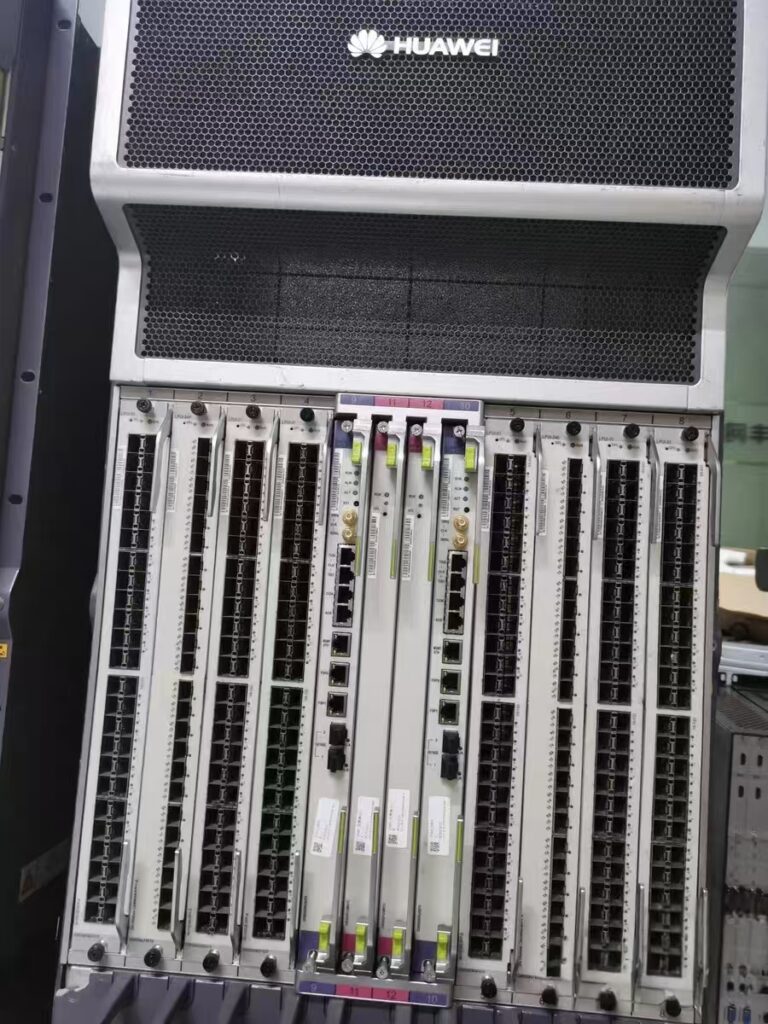
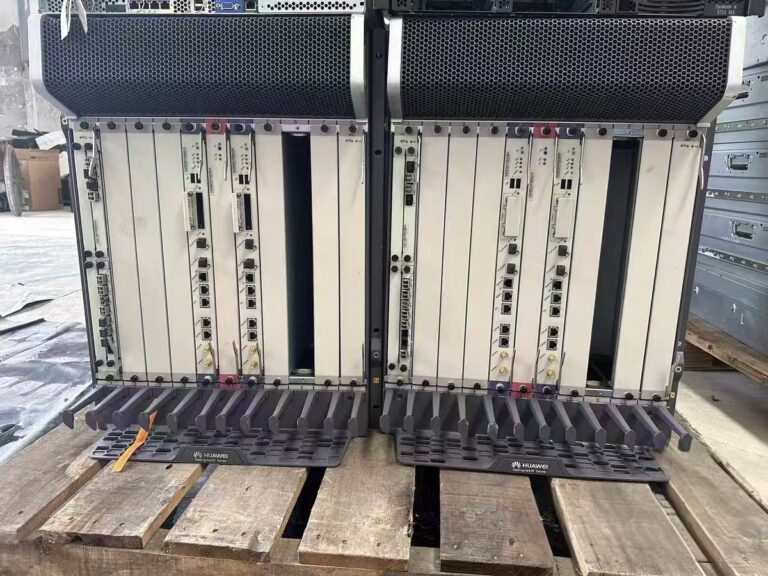
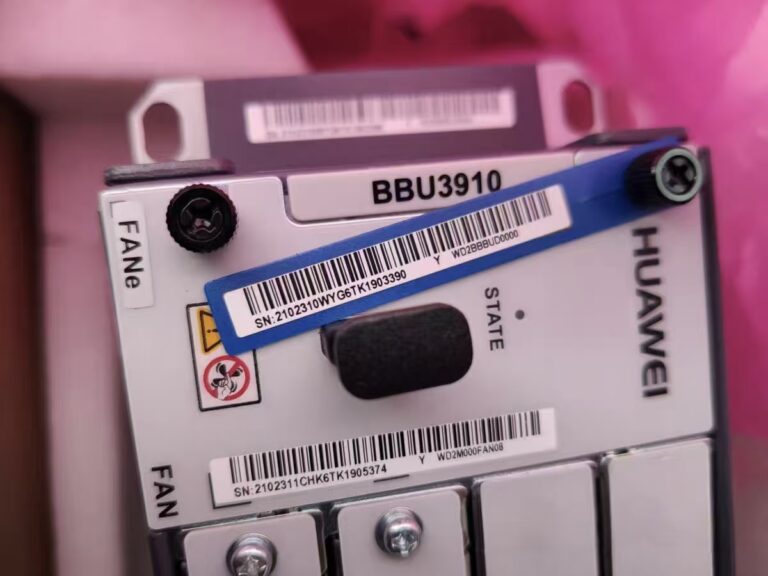
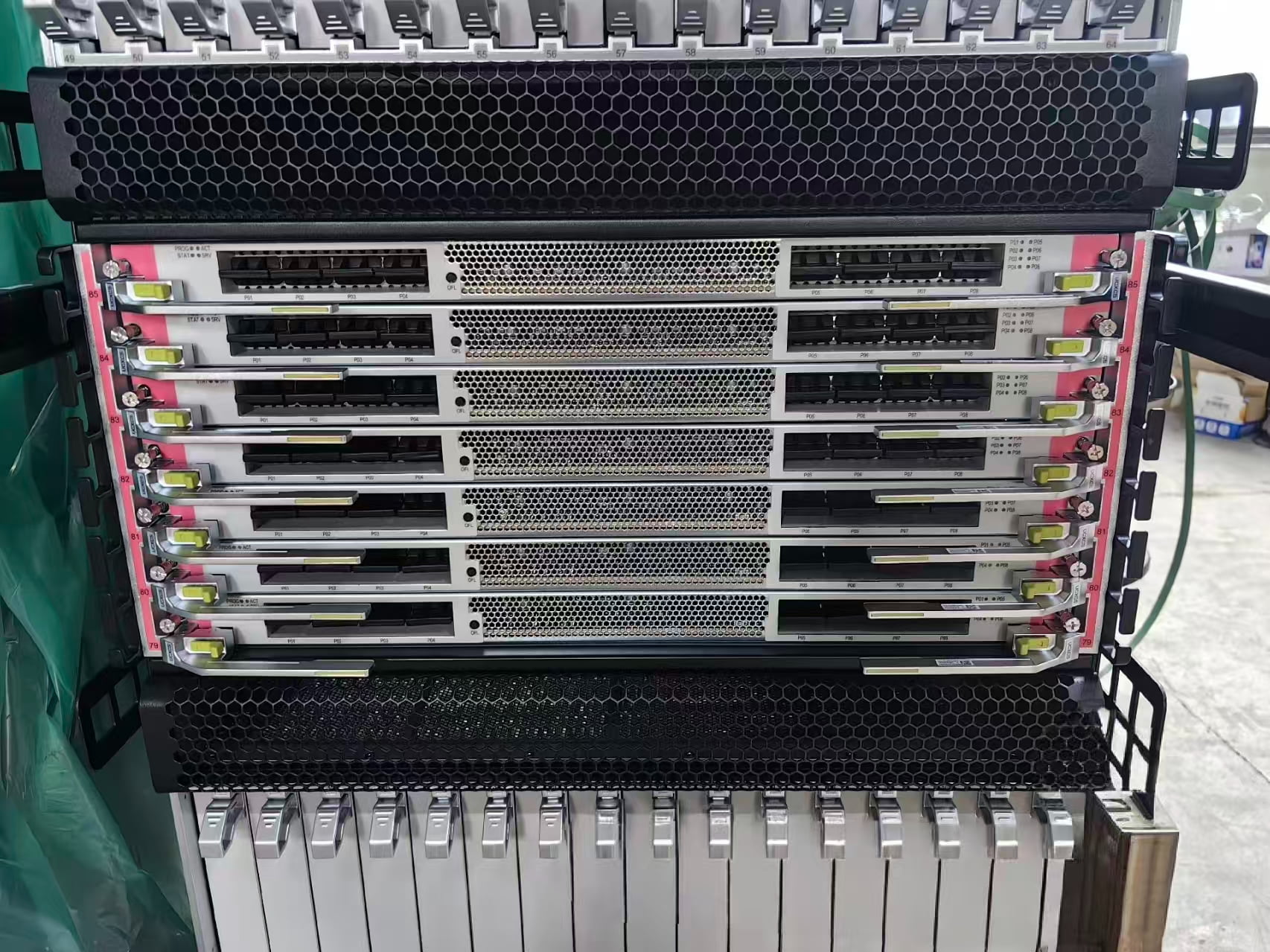
I also ask customers to send photos of the chassis, board label, subrack, and current configuration if they can. These photos often save time. A model name may be written in many ways by different buyers. A part number and a clear photo can reduce mistakes. In telecom spare parts trading, model numbers and PN codes are often the most accurate way to identify the required board, especially for replacement orders.
Which Huawei OSN Platforms Matter Most for Long-Haul Projects?
A board may look suitable in a quotation, but the OSN platform decides whether it can really work. This point is often ignored.
For long-haul networks, I pay close attention to Huawei OSN 1800, OSN 6800, and OSN 8800 platforms. The right board depends on the platform role, site size, service capacity, and network layer.
In my experience, many emerging market operators and contractors still run mixed Huawei OSN networks. They may have OSN 1800 at access or metro edge sites, OSN 6800 in backbone or aggregation routes, and OSN 8800 in higher-capacity core transmission routes. This mixed environment is normal. It also means the buyer must not treat all OSN boards as the same type of item.
Based on common project inquiries and publicly available product positioning, OSN 1800 is often discussed for metro-edge scenarios, while OSN 6800 and OSN 8800 are more commonly associated with backbone, metro core, and long-haul transmission applications. The exact board choice must follow the system design.
| Platform | Typical role I see | Buying focus |
|---|---|---|
| OSN 1800 | Access, metro edge, smaller transport nodes | Cost, availability, service type |
| OSN 6800 | Backbone, aggregation, long-haul transmission | Compatibility, capacity, optical design |
| OSN 8800 | High-capacity core and backbone | High performance, slot and license support |
| Mixed OSN network | Existing operator network with many generations | Replacement accuracy and upgrade planning |
From our experience in delivery, a frequent oversight is that buyers request a board from one OSN family but show photos from another family. Sometimes they only copy a model from a tender document. Sometimes the tender document is old. Sometimes the site team changed the system years ago. I always ask for confirmation before I ship. This is not because I want to slow down the order. I do it because one wrong board can lead to return shipping, project delay, and extra site work.
I also remind buyers to check power and heat conditions. Long-haul sites may be in remote areas. Cooling and power may not be ideal. A high-capacity board may need more support from the chassis and site system. If the site cannot support it well, a simpler and stable configuration can be the better choice.
Should I Choose New, Refurbished, or Used Huawei OSN Boards?
A low price can look attractive, but hidden quality risk can destroy the saving. A high price can also waste limited project budget.
I choose new, refurbished, or used Huawei OSN boards based on project risk, delivery time, warranty need, and budget. For many emerging markets, tested refurbished boards with warranty give a strong balance between cost and reliability.
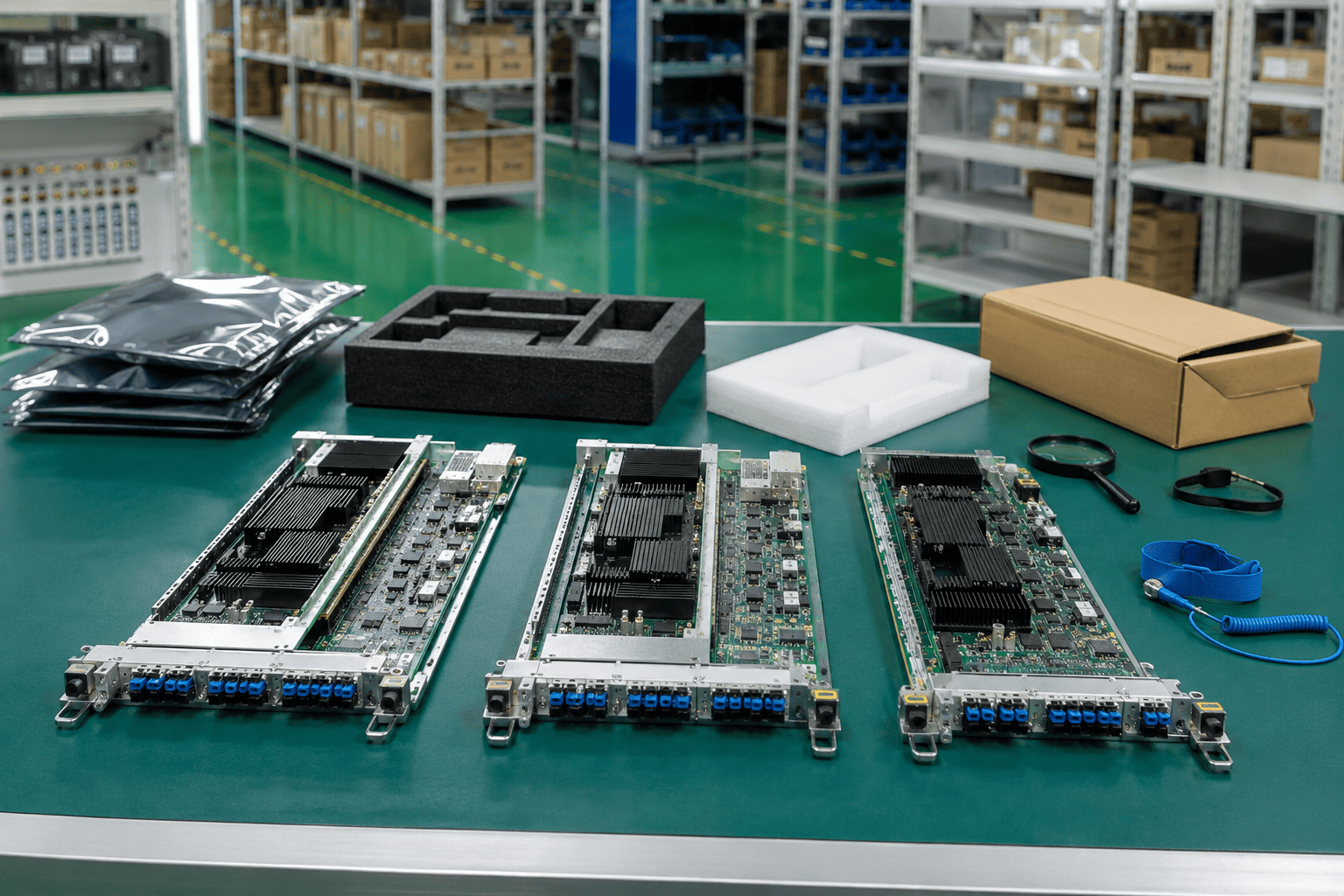
I work with many global buyers who must control cost. Some buyers are operators. Some are system integrators. Some are distributors. Some are procurement agents. Their needs are not the same. A new board may be best for a critical new project with strict tender rules. A refurbished board may be best for expansion and maintenance. A used board may be acceptable for urgent replacement if it is tested, clean, and supported with clear warranty terms.
The key point is not only the condition name. The key point is the quality process behind it. In the telecom equipment industry, refurbished or pre-owned equipment is often judged by testing, calibration, warranty, and quality assurance. For example, refurbished equipment is positioned around certified refurbishment, software, calibration, and warranty. Other telecom refurbishment providers also emphasize multi-point testing and quality assurance. This is why I care about the source, testing, label, optical port condition, connector condition, packaging, and after-sales promise. A used board without testing is a risk. A refurbished board with full testing and warranty can be a very practical solution.
| Condition | When I recommend it | Main benefit | Main caution |
|---|---|---|---|
| New | Formal project, strict tender, long-term rollout | Best condition and easier acceptance | Higher cost and sometimes longer lead time |
| Refurbished | Expansion, maintenance, budget-sensitive projects | Strong cost-performance balance | Must be tested and warrantied |
| Used | Emergency repair or low-budget replacement | Fast stock and lower price | Must verify function and appearance |
| Pulled working board | Same network replacement | Often very compatible | Need supplier testing before shipment |
At Baoding Enken Trading, we benefit from a strong local telecom spare parts supply network in Baoding City, Hebei Province, China. Before our international trade business, we were deeply involved in domestic trade for almost 20 years. Because of that, we have established long-term, stable, and good partnerships with many manufacturers, operators, distributors, and used equipment recyclers in this industry. This local sourcing network helps us offer faster sourcing options and competitive pricing for common telecom spare parts from Huawei, ZTE, Ericsson, Nokia, Alcatel, and Juniper.
I also believe warranty must be clear. For different products and conditions, we can provide 6 months or 1 year warranty. Our testing team checks the product before shipment. In general, telecommunications equipment testing helps verify compatibility, interoperability, durability, signal quality, reliability, and performance. This testing step is very important for OSN boards because the buyer may install the board far away from the main office. If the board has a fault after arrival, the cost of site work can be much higher than the cost of the board itself.
What Compatibility Mistakes Should Buyers Avoid?
Many OSN procurement problems do not come from bad hardware. They come from small missing details before the order is placed.
Buyers should avoid ordering Huawei OSN boards without checking chassis model, slot support, PN code, software version, license need, optical module type, power condition, and network capacity plan. These checks prevent most wrong purchases.
I have seen many avoidable mistakes in customer inquiries. A buyer may ask for a board with a high transmission rate, but the existing OSN chassis cannot support it. Another buyer may order the right board family but the wrong PN version. Another buyer may forget that a feature needs a license. Another buyer may buy a board without matching optical modules. The board may be good, but the system still cannot run as expected.
Here is the checklist I prefer to use before confirming any OSN board order.
| Check item | What I ask the buyer to confirm | Why it matters |
|---|---|---|
| Exact model and PN | Board label or old board photo | Avoids wrong version |
| OSN chassis | OSN 1800, 6800, 8800, or other | Confirms platform match |
| Slot position | Current slot or planned slot | Prevents installation failure |
| Software version | Current network version | Confirms feature support |
| License status | Needed functions and service type | Avoids hidden activation issues |
| Optical modules | Rate, wavelength, distance | Makes the link work correctly |
| Fiber route | Distance and attenuation | Supports long-haul design |
| Power and cooling | Site condition and shelf capacity | Reduces stability risk |
A common mistake is overbuying. Some buyers want the most advanced board because they think it protects the future. I understand this thinking. But if the board needs a new chassis, new license, new optics, and extra power support, the total cost becomes much higher. In some cases, the buyer could achieve the same business result with a more common OSN board and a better optical plan.
Another mistake is underbuying. A buyer may choose the cheapest board and then discover that it cannot support the needed service capacity. This also creates waste. The right approach sits in the middle. I try to match the board to the traffic forecast. I also leave reasonable room for growth. I do not push the most expensive board if the network does not need it.
How Do I Build a Practical Huawei OSN Buying Decision?
A rushed purchase can solve one urgent problem and create three new ones. A clear buying process protects the whole project.
I build a Huawei OSN buying decision by combining technical fit, cost, delivery, testing, warranty, and after-sales support. This process helps buyers choose practical boards for long-haul networks with fewer risks.

When a customer sends me an inquiry, I do not only reply with price. I try to understand the situation first. I know some buyers are under time pressure. They may need a quotation today. They may need delivery this week. But I still ask the key questions because a fast wrong shipment is worse than a slightly slower correct shipment.
My practical decision process is simple.
| Step | What I do | Result |
|---|---|---|
| 1 | Confirm the network scenario | I know if it is new build, upgrade, or replacement |
| 2 | Confirm chassis and PN | I reduce compatibility risk |
| 3 | Confirm capacity and distance | I match the board to the route |
| 4 | Confirm software and license | I avoid hidden function problems |
| 5 | Compare new, refurbished, and used stock | I balance cost and delivery |
| 6 | Test and pack before shipment | I reduce arrival failure risk |
| 7 | Provide warranty and support | I protect the buyer after delivery |
This process is especially useful for global buyers who purchase from far away. They may not have a full technical team in China. They need a supplier who can understand the product, read the PN, compare alternatives, and explain the risk in simple words. I see my role as more than a seller. I act as a practical sourcing partner.
For example, if a buyer asks for a high-capacity board for a long-haul route, I may ask about current traffic first. If the actual traffic is still low, I may suggest a more cost-effective board that fits the current platform. If the buyer has a future expansion plan, I may suggest a board that supports the next step without forcing a full system change now. This kind of advice helps the buyer protect budget and reduce risk.
I also care about delivery documents. Many B2B buyers need photos, labels, packing details, HS code support, invoice, and shipping options. A telecom spare part order is not complete when the price is agreed. It is complete when the buyer receives the correct tested product and can install it with confidence.
Our Pre-Shipment Checking Process
Before shipment, we usually follow a practical checking process:
- Confirm the model and PN code.
- Check the board label and appearance.
- Inspect connector and optical port condition.
- Check whether the requested optical modules match rate, wavelength, and distance.
- Perform basic function checking when test conditions are available.
- Use anti-static packing and protective foam.
- Send packing photos when the buyer needs confirmation.
For optical modules and related transmission components, industry testing processes often include visual inspection, compatibility checks, optical performance measurements, optical power and wavelength testing, traffic testing, and BER testing. A clear optical transceiver testing process can help buyers understand why pre-shipment checking matters.
Conclusion
The best Huawei OSN board is the one that fits your real network, budget, delivery need, and compatibility limits, not the one with the highest speed.
For buyers in emerging markets, the safest choice is usually not the most expensive or newest board. The safest choice is the board that matches the OSN platform, chassis, slot, software version, license, optical module, route distance, testing condition, and project budget.
If you are not sure which Huawei OSN board is right for your project, send us the chassis photo, old board label, PN code, route distance, service requirement, and target budget. We can help you check compatibility, compare new/refurbished/used options, and suggest a practical sourcing solution before you place the order.