
Why Is Advanced Huawei Telecom Equipment Rare in the Secondary Market?
Customers often ask us the same question:
Why is it becoming increasingly difficult to find recent and advanced Huawei telecom equipment on the secondary market?
This is a reasonable question.
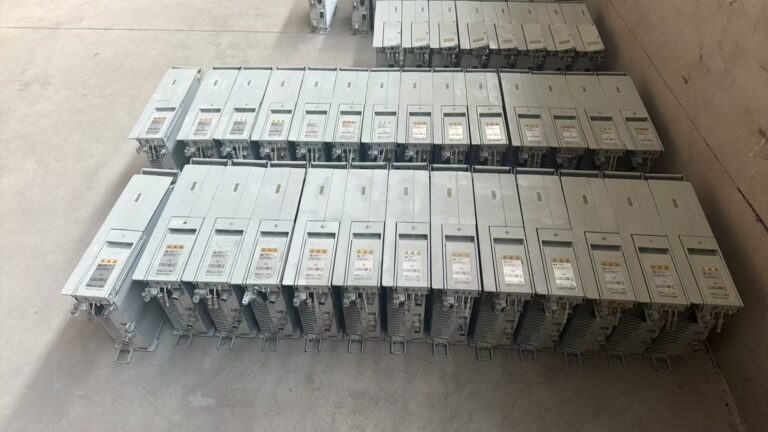
Huawei continues to develop 5G, 5G-Advanced, optical transmission, data communication and access-network products. However, most Huawei equipment available from independent suppliers still consists of mature platforms and legacy spare parts, such as the BBU3900, BSC6900, OSN, RTN, MA5600 and earlier-generation RRU modules.
This does not necessarily mean that Huawei is producing fewer advanced telecom products.
Based on our practical experience in the international telecom spare-parts business, a more accurate explanation is that new-generation equipment takes longer—and faces more obstacles—to enter the open secondary market.
1. Advanced Huawei equipment is still operating in live networks
The most important reason is also the simplest: most recent equipment has not yet been decommissioned.
Advanced AAUs, Massive MIMO radios, baseband processing boards, high-capacity optical transmission cards and newer routers remain productive assets for telecom operators.
As long as these products continue to support network traffic, capacity expansion or coverage optimization, operators have little reason to release them.
Even when equipment is temporarily unused, it may remain in an operator’s warehouse as:
- Emergency replacement stock
- Expansion inventory
- Maintenance spare parts
- Regional deployment reserves
- Equipment for future network relocation
In our experience, telecom equipment rarely enters the secondary market simply because a newer model has been released.
It normally becomes available only after a network modernization project, platform replacement, technology migration or large-scale decommissioning program.

2. Deinstalled equipment is not necessarily surplus equipment
Telecom operators frequently retain valuable equipment as internal spare parts.
A Huawei RRU, BBU board or transmission card removed from one site may still be useful in another part of the same network.
For example, equipment removed during a regional network optimization project may be:
- Inspected and tested
- Returned to the operator’s central warehouse
- Reallocated to another region
- Reserved for emergency maintenance
- Used as a source of repair components
This internal circulation significantly reduces the quantity of recent Huawei equipment entering auctions, recycling channels and independent suppliers’ inventories.
From the perspective of a telecom spare-parts supplier, this is an important distinction:
Deinstalled equipment is not automatically surplus equipment.
Only when an operator determines that the equipment is no longer required for deployment, expansion or maintenance is it likely to enter the secondary market.
3. China’s 5G investment cycle has changed the available supply
China completed an exceptionally large 5G rollout over a relatively short period.
After the initial high-investment construction phase, operators gradually shifted their attention toward:
- Improving network coverage
- Reducing energy consumption
- Increasing network utilization
- Generating returns from existing investments
- Upgrading selected areas to 5G-Advanced
- Optimizing rather than completely rebuilding networks
This creates a divided secondary market:

- Older 2G, 3G and 4G platforms are gradually released
- Some early-generation 5G products become available in limited quantities
- Current-generation 5G and 5G-A equipment remains in active service
- Software upgrades sometimes replace complete hardware replacement
The GSMA previously forecast that, following several years of intensive 5G construction, Chinese operators would increasingly focus on generating returns from their network investments.
This helps explain why the market is not receiving a continuous supply of recently manufactured Huawei hardware.
4. Modern telecom equipment is increasingly dependent on software
Older telecom spare parts were often relatively straightforward to identify, test and replace.
If the part number, hardware revision and physical interface matched, the component had a reasonable chance of working in the customer’s system.
New-generation equipment is more complicated.
A modern Huawei board, AAU or network element may depend on:
- A compatible software release
- Commercial licenses
- Network-management authorization
- Digital certificates
- Matching control and processing boards
- Operator-specific configurations
- Supported frequency bands
- Correct output-power settings
- Particular firmware or BootROM versions
Obtaining the physical hardware is therefore only one part of the solution.
A unit may look new and complete but still be unsuitable for the customer’s live network.
This is why a responsible supplier should never confirm compatibility based only on a product name or an exterior photograph.

5. New equipment is more difficult for independent suppliers to test
The telecom spare-parts industry has accumulated considerable technical knowledge about established Huawei platforms.
Experienced suppliers may already have compatible chassis, power systems, test boards and engineers familiar with products such as the BBU3900, BSC6900, OSN and RTN series.
Testing new-generation equipment can require:
- A complete compatible system
- Specialized test fixtures
- Matching system software
- Network-management access
- RF testing instruments
- Suitable antennas
- Compatible fibers and optical modules
- Detailed technical documentation
A simple power-on test is not sufficient for many carrier-grade products.
For an RRU or AAU, powering on the unit does not confirm:
- RF output performance
- Optical communication
- Alarm status
- Calibration accuracy
- Full-load stability
- Compatibility with the customer’s baseband system
Suppliers without the necessary testing capabilities may decide not to purchase these products. Others may sell them with uncertain or incomplete condition descriptions.
This contributes to the limited supply of genuinely tested, deployment-ready new-generation equipment.
6. Telecom operators follow strict asset-disposal procedures
Advanced telecom products are not ordinary electronic goods.
Some units may retain configuration files, certificates, logs, network addresses or other operational information.
Before these assets can be released, operators may need to complete procedures such as:
- Asset verification
- Financial write-off
- Data sanitization
- Security inspection
- Serial-number registration
- Internal transfer evaluation
- Environmental processing
- Approved auction or recycling procedures
These processes can take considerable time.
In some cases, the equipment is returned to the original manufacturer, transferred to an authorized service organization or processed by a designated recycling contractor instead of being sold openly.
The more recent and strategically important the equipment is, the more carefully it is normally managed.
7. Huawei’s product lifecycle influences spare-parts availability
Huawei manages its products through defined lifecycle stages, including:
- GA: General Availability
- EOM: End of Marketing
- LODSP: Last Order Date of Spare Parts
- EOS: End of Service and Support
This lifecycle structure directly influences the secondary market.
While a product remains within the manufacturer’s active sales and service lifecycle, operators can often obtain equipment and maintenance support through official channels. They are therefore less likely to purchase the same product from independent suppliers.
Demand for independently supplied spare parts usually becomes stronger when:
- The product is no longer actively marketed
- Official delivery times become too long
- The customer requires only one or two replacement units
- OEM prices are no longer economical
- The installed network must remain operational after official support declines
- A complete platform upgrade would be too expensive
This is one reason why mature Huawei platforms often have more active secondary-market demand than the latest products.
Huawei provides additional information about its lifecycle stages in its official product lifecycle management statement.
8. International compliance makes cross-border circulation more complicated
 Huawei-related transactions may involve additional regulatory and commercial considerations.
Depending on the exact product, destination and parties involved, exporters and importers may need to evaluate:
- Export-control requirements
- Sanctions and restricted-party screening
- Customs classifications
- Country-of-origin information
- End users and intended end use
- Import restrictions
- Local telecom regulations
- Product certification requirements
Some buyers are also concerned about whether Huawei equipment can legally be imported, deployed or supported in their countries.
The Huawei brand alone does not determine whether a transaction is permitted or prohibited. Every transaction should be reviewed individually.
Important factors include:
- Exact Huawei part number
- Complete product description
- Country of origin
- Destination country
- Buyer and final end user
- Intended application
- Incorporated components or controlled technology
- Applicable export and import regulations
When the compliance position is unclear, the parties should obtain professional legal or export-control advice before completing the shipment.
9. Recent equipment has high residual value
New Huawei AAUs, RRUs, baseband boards and optical transmission cards can retain considerable commercial value.
If this equipment is removed from one region, an operator may prefer to relocate it, repair it or retain it for future maintenance instead of selling it.
The internal value of a spare part can also be higher than its potential resale price.
For example, one difficult-to-source board may help an operator avoid:
- An extended network outage
- An emergency platform upgrade
- Replacement of an entire system
- Service interruptions for existing subscribers
For this reason, valuable equipment may remain in an operator’s warehouse for years before it is officially classified as surplus.
10. Secondary-market demand favors established platforms
The newest product is not always the product customers need most.
Many international customers require spare parts that are compatible with an existing network. Their priority is to maintain the installed system—not necessarily to purchase the latest technology.
Common requirements may include parts for:
- Huawei BSC6900
- Huawei BBU3900
- Huawei BTS3900
- Huawei DBS3900
- Huawei OSN transmission systems
- Huawei RTN microwave systems
- Huawei MA5600 and MA5800 access platforms
- Earlier-generation Huawei RRU products
These platforms may remain operational for many years, particularly in markets where a complete network modernization project would require substantial investment.
As a result, secondary-market suppliers have a stronger incentive to purchase established products with predictable international demand.
This further increases the visible difference between abundant legacy equipment and scarce new-generation equipment.

Our Insight From the International Telecom Spare-Parts Business
Working with customers from different countries has taught us an important lesson:
The market does not always need the newest telecom equipment. It needs the correct equipment for the customer’s existing network.
A discontinued Huawei board that keeps a live BSC, BTS, BBU, OLT or transmission system operating may be more valuable to a customer than a technically superior product that requires a complete network upgrade.
We have also observed that availability and compatibility depend on much more than the model name.
Two products that look almost identical may have different:
- Part numbers
- Hardware revisions
- Frequency bands
- Output-power levels
- Connector arrangements
- Software requirements
- Power configurations
- Regional specifications
For this reason, we normally ask customers to provide as much technical information as possible before we begin searching for a replacement.
Useful information includes:
- Full Huawei part number
- Model name and description
- Hardware version
- Required quantity
- Clear photographs of the equipment
- Photographs of labels and connectors
- Existing chassis or system model
- Software version, when relevant
- Required frequency band
- Required output power
- Destination country
These details allow us to search more accurately and reduce the risk of supplying an incompatible product.
Rare products may require a different sourcing strategy
Another practical lesson from our business is that rare equipment cannot always be found in ready-to-ship stock.
Locating a difficult Huawei part may require searching through:
- Operator surplus inventories
- Network dismantling projects
- Repair centers
- Authorized asset-disposal channels
- Specialized domestic suppliers
- Warehouses containing long-term spare stock
For certain mechanical accessories, such as unusual guide rails, brackets, mounting parts or cable-management components, custom manufacturing may be more realistic than waiting indefinitely for an original item to appear.
When considering custom manufacturing, customers should provide accurate information such as:
- Overall dimensions
- Material requirements
- Hole diameters
- Hole spacing
- Mounting position
- Load requirements
- Detailed photographs or drawings
Custom manufacturing is generally more suitable for non-electronic mechanical parts. It should not be treated as a substitute for safety-critical or technically controlled electronic modules.

If the exact product cannot be found, buyers should avoid purchasing a visually similar substitute without verification.
A safer procurement process is:
- Confirm the complete Huawei part number.
- Check the hardware revision.
- Identify the original system or chassis.
- Confirm frequency and output-power requirements.
- Verify connectors and physical interfaces.
- Check software and license compatibility.
- Determine whether an officially compatible alternative exists.
- Consider a tested refurbished unit.
- Evaluate repair if the original defective unit is available.
- Confirm import and deployment compliance before shipment.
This process may take longer, but it is considerably less expensive than receiving an unusable product.
How to evaluate a telecom spare-parts supplier
When purchasing Huawei telecom equipment from an independent supplier, buyers should consider more than price.
A reliable supplier should be able to provide:
- Clear photographs of the actual product
- Complete part-number information
- Serial-number or label verification when appropriate
- An accurate condition description
- Details about the testing process
- Compatibility checks based on available information
- Secure export packaging
- A reasonable warranty or return policy
- Honest communication about uncertain compatibility
Buyers should be cautious when a supplier claims that equipment is “fully tested” but cannot explain what functions were tested.
For complex equipment, a meaningful test may involve far more than confirming that the power indicator turns on.
Will more advanced Huawei equipment enter the secondary market?
Yes, but the supply will probably increase gradually rather than all at once.
More recent Huawei equipment may enter the market when:
- Early 5G systems reach their replacement cycle
- Operators begin larger-scale 5G-A upgrades
- Network consolidation creates surplus inventory
- Certain products reach EOM or EOS milestones
- Operators release accumulated warehouse stock
- More professional telecom asset-recovery programs are established
However, the first batches entering the market may have inconsistent configurations, software versions and physical conditions.
Buyers should pay particular attention to:
- Product traceability
- Hardware revisions
- Test reports
- Software compatibility
- License requirements
- Frequency bands
- Physical condition
- Repair history
Conclusion
The limited availability of advanced Huawei telecom equipment is not caused by a single factor.
It is the combined result of:
- Continued use in live networks
- Internal spare-parts retention
- Slow decommissioning cycles
- High residual value
- Software and license dependencies
- Strict security and disposal procedures
- Huawei’s product lifecycle management
- International compliance requirements
- Difficulties in independent testing
For buyers, the key is not simply to find the newest product.
The real objective is to find a traceable, tested and compatible solution that can operate reliably in the existing network.
As an independent telecom spare-parts supplier, our role is not only to locate hardware. We also help customers identify the correct product, evaluate realistic alternatives and reduce procurement risks—especially when the required equipment is rare, discontinued or no longer readily available through conventional channels.
Looking for Huawei telecom spare parts?
If you are searching for a Huawei BBU, RRU, AAU, BSC, BTS, OLT, OSN, RTN or another difficult-to-source telecom spare part, please send us:
- Part number
- Required quantity
- Equipment photographs
- Hardware version
- Existing system information
- Destination country
Our team will review the requirement and help you identify a suitable sourcing, replacement or repair solution.
Contact us: https://zejiuhengtrade.com/contact-2/ Email: alison@enkentrade.com Lucy@enkentrade.com WhatsApp: +8619538142158 +8615851838948
---
Frequently Asked Questions
Why are new Huawei 5G spare parts difficult to find?
Most recent Huawei 5G products are still operating in live networks or being retained by operators as internal maintenance inventory. Their software dependencies, high residual value and strict disposal requirements also limit secondary-market availability.
Can a used Huawei board be installed directly?
Not always. Compatibility can depend on the part number, hardware revision, software release, license, chassis, frequency band and operator configuration. These details should be verified before purchasing.
What information is required to find a Huawei spare part?
Customers should provide the full part number, model, hardware version, quantity, photographs, existing system model and relevant frequency or software information.
Is refurbished Huawei equipment reliable?
Properly inspected and tested refurbished equipment can be a practical solution for maintaining existing networks. Reliability depends on the equipment’s history, the supplier’s testing capabilities and whether the unit is fully compatible with the customer’s system.
Can mechanical Huawei accessories be custom-made?
Some non-electronic parts, such as guide rails, brackets and cable-management accessories, may be custom-manufactured if accurate measurements, drawings and material requirements are available.
Will more Huawei 5G equipment become available in the future?
It is likely that availability will increase as early-generation 5G systems are upgraded or decommissioned. However, supply will depend on operators’ network plans, asset-disposal procedures and international market demand.
Disclaimer: This article provides general industry information based on our experience in the telecom spare-parts trade. Product compatibility, import requirements and export-control obligations must be evaluated for each individual transaction. This article does not constitute legal advice.