
What Is a Huawei AAU? Huawei AAU vs RRU Explained
In my daily work as a telecom spare parts supplier, I often receive inquiries containing both Huawei AAU and RRU models.
Some buyers understand the technical differences clearly. Others simply send a list containing “Huawei AAU,” “5G RRU” or a general model name without the part number, frequency band or hardware version.
This creates a real purchasing risk because an AAU and an RRU are not just different names for the same product.
In simple terms:
A Huawei RRU is normally a separate radio unit connected to an external antenna. A Huawei AAU integrates the radio-frequency unit and antenna system into one piece of equipment.
That integration affects compatibility, installation, inspection, testing, packing and shipping.
What Is a Huawei AAU?
AAU stands for Active Antenna Unit.
Huawei describes the AAU as an integrated antenna solution combining RF components and antenna elements. This design is especially important for Massive MIMO because the system may require many antenna elements and RF transceiver channels.
Huawei’s explanation of its FDD Massive MIMO AAU solution describes how integrating the RF unit and antenna elements improves the engineering feasibility of the system.
A Huawei AAU may contain:
- RF transceiver channels
- Power amplifiers
- Filters
- Antenna array elements
- Beamforming functions
- Optical interfaces
- Power and control connections
However, AAU does not automatically mean 5G.
Huawei has produced AAUs for different technologies and frequency bands. Its public active antenna product information includes products supporting GSM, UMTS and LTE as well as newer Massive MIMO and 5G solutions.
The exact model and part number must therefore be checked.
What Is a Huawei RRU?
RRU stands for Remote Radio Unit.
In a distributed base station, the BBU performs baseband processing and is normally installed in an equipment room or cabinet. The RRU is installed closer to the antenna and connected to the BBU through optical fiber.
Huawei describes this architecture in its history of the distributed BBU and RRU base station.
A typical installation looks like this:
BBU → Optical Fiber → RRU → RF Jumper → Passive AntennaThe RRU and antenna are separate pieces of equipment. This makes it possible to replace the radio, antenna or RF cable separately.
With an AAU, the structure is more integrated:
BBU or Baseband Platform → Optical Fiber → AAUThe AAU contains both the active radio section and antenna system.
Huawei AAU vs RRU
| Item | Huawei AAU | Huawei RRU |
|---|---|---|
| Full name | Active Antenna Unit | Remote Radio Unit |
| Antenna | Integrated into the equipment | Normally installed separately |
| RF jumpers | Usually reduced or internally integrated | Required between RRU and antenna |
| Typical application | Active antenna, beamforming and Massive MIMO deployments | Distributed base stations using external antennas |
| Network generations | Depends on model; may support 3G, 4G or 5G | Depends on model; may support 2G, 3G, 4G or 5G |
| Physical size | Usually larger and heavier | Usually smaller |
| Testing | More complicated | Generally easier in a compatible system |
| Transportation | Requires more protective packing | Usually easier and less expensive |
| Common sourcing problem | Wrong PN, damaged antenna surface or missing mounting kit | Wrong band, damaged RF port or missing connector |
This table explains the general difference, but it cannot be used as a compatibility decision.
Two products working in the same frequency band are not necessarily interchangeable.
AAU Does Not Always Mean 5G
One misunderstanding I regularly encounter is that buyers describe every AAU as a 5G product and every RRU as a 4G product.
That is not accurate.
AAU and RRU describe how the radio equipment is constructed and deployed. They do not independently define the network generation.
Some earlier Huawei AAUs support GSM, UMTS or LTE. Some newer Huawei RRUs can support LTE and NR applications, depending on the model and software environment.
When we receive an AAU inquiry, I normally ask the buyer to confirm:
- Exact model
- Huawei part number
- Frequency band
- TDD or FDD
- TRX configuration
- Output power
- BBU platform
- Software version
Without this information, a price may be provided for the wrong product even if the model names look similar.
What I See in the Secondary Telecom Market
Baoding is one of China’s largest centers for secondary telecom equipment. This gives us access to many local traders, dismantling projects, maintenance companies and equipment-collection channels.
However, being close to the market does not mean every AAU is immediately available.
In my experience, sourcing a Huawei AAU is usually more complicated than sourcing a common Huawei RRU.
AAU Supply Is More Project-Dependent
Older RRU models frequently enter the secondary market through operator upgrades, base station removals and equipment-replacement projects.
Many newer AAUs are still operating in live networks. Large quantities may only become available when a suitable dismantling or network-modernization project is released.
When a buyer asks for 50 or 100 units, the complete quantity is rarely sitting in one warehouse. We may need to collect units from several sources and then check whether their part numbers and hardware versions match.
This is why I do not like to tell a customer that a large quantity is “in stock” until the actual units have been verified.
The Same Model Name May Hide Different Products
Buyers sometimes ask for models such as AAU5366, AAU5656, AAU5668 or AAU5768 without providing the PN.
But the general model name is only the beginning.
Different part numbers under one AAU model may represent different:
- Frequency bands
- Regional configurations
- Hardware versions
- Output-power specifications
- TRX configurations
- Software requirements
For an accurate quotation, a clear factory-label photo is often more useful than a long written description.
Missing Accessories Can Change the Real Cost
AAU quotations are not always directly comparable.
One supplier may quote only the AAU body. Another quotation may include the mounting bracket, clamps, bolts, power connector and fiber accessories.
A buyer may select the lowest unit price and later discover that the installation hardware must be purchased separately.
This happens frequently with used telecom equipment. The AAU is removed from the tower, but the bracket or connector remains at the original site.
Before quoting, we try to confirm whether the customer needs:
- Mounting bracket
- Pole clamps
- Tilt-adjustment components
- Bolts
- Power connector
- Optical fiber
- Grounding accessories
For large quantities, the cost of these missing parts can become significant.
AAU Transportation Costs Are Easy to Underestimate
An AAU is normally larger and heavier than an RRU because the antenna and radio are integrated.
A customer may see an attractive equipment price but then be surprised by the freight cost.
The final shipping cost depends on the packed size and gross weight, not only the net weight shown in the datasheet.
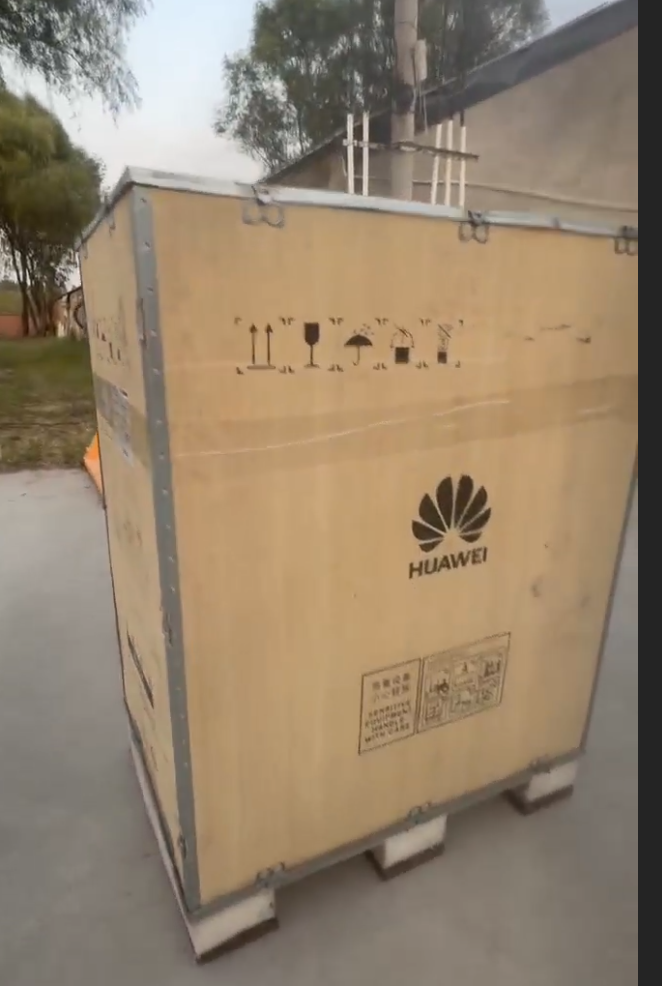
To protect the antenna surface, AAUs may require reinforced cartons, foam, pallets or wooden cases. Poor packing can turn a good unit into a damaged unit before it reaches the customer.
For this reason, we normally confirm the following before giving a final shipping quotation:
- Number of packages
- Packed dimensions
- Gross weight
- Packing method
- Destination
- Air, sea or express delivery
For a large AAU order, airfreight or sea freight is often more practical than ordinary courier service.
AAU Inspection Is Different from RRU Inspection
The front surface of an AAU is not just an ordinary cover. It is part of an integrated antenna product.
During inspection, we pay attention to:
- Cracks or deformation on the antenna surface
- Serious dents
- Water-ingress signs
- Corrosion and oxidation
- Damaged seals
- Bent heat-sink fins
- Broken optical or power connectors
- Missing screws
- Previous repairs or repainting
- Incomplete mounting hardware
Minor installation marks may be acceptable for used equipment. Cracks, serious deformation, water damage or heavy corrosion should be treated differently.
Every defect should be photographed and disclosed before shipment.
A Power-On Test Is Not a Complete AAU Test
This is another point buyers should understand.
Powering on an AAU only proves that the equipment accepts power and begins its startup process. It does not automatically confirm that every RF channel, antenna element or function is operating normally.
Depending on the available test environment, an AAU inspection may include:
- Model and PN verification
- Serial-label inspection
- Power-on test
- LED-status check
- Optical-link check
- Hardware recognition
- Alarm check
- RF-channel status
- Diagnostic screenshots
- Stability testing
A more complete test may require the correct BBU, baseband boards, software version, configuration and RF test equipment.
In the secondary market, not every supplier has a full test environment for every AAU model. I believe the professional approach is to explain exactly what can be tested instead of simply writing “fully tested” on the quotation.
When requested, we can provide test photos, videos and serial-number records according to the agreed test scope.
New, Used or Refurbished Huawei AAU
The condition description also needs to be clear.
New Original
New original AAUs normally have the highest price and best cosmetic condition. However, buyers should still confirm the production date, packaging, accessories and warranty.
Used
Used AAUs may have normal installation marks but can offer better value for maintenance or replacement projects.
Before shipment, the unit should be inspected for physical damage, connector condition and water ingress and tested according to the available environment.
Refurbished
A refurbished AAU may have been cleaned, repaired or cosmetically restored.
The word “refurbished” does not automatically mean better than “used.” Buyers should ask what work has actually been performed and what test evidence and warranty are included.
From my perspective, a clean and tested used unit with an original surface can sometimes be preferable to a heavily repainted unit with an unclear repair history.
How to Compare Two Huawei AAU Quotations
When comparing offers, do not look only at the unit price.
Check whether both suppliers are quoting the same:
- Model and PN
- Frequency band
- TRX configuration
- Hardware version
- Product condition
- Mounting kit
- Power connector
- Test scope
- Warranty
- Packing method
- Delivery time
- Actual available quantity
A lower price may simply mean that the quotation excludes accessories, testing, warranty or proper export packing.
Information Needed for a Huawei AAU RFQ
A useful RFQ should include:
Brand: Huawei
Model:
Part Number:
Frequency Band:
TDD or FDD:
TRX Configuration:
Output Power:
Quantity:
Condition: New / Used / Refurbished
Hardware Version:
BBU Platform:
Software Version:
Mounting Kit Required: Yes / No
Power Connector Required: Yes / No
Fiber Required: Yes / No
Testing Requirement:
Destination Country:
Required Delivery Time:
Batch Delivery Accepted: Yes / No
If the AAU is intended to replace an existing unit, attach a clear photo of the original factory label.
This helps us check the correct product more quickly and reduces the risk of quoting an incompatible unit.
Can AAU and RRU Replace Each Other?
Normally, this should not be decided by a trader or supplier alone.
An RRU works with an external antenna. An AAU integrates the radio and antenna. Replacing one architecture with another may require changes to:
- Antenna design
- Mounting structure
- RF and optical connections
- BBU configuration
- Software
- Licenses
- Power supply
- Network planning
Even if both products support the same frequency band, they may not be direct substitutes.
The final decision should be confirmed by the buyer’s network engineer.
Our Huawei AAU and RRU Sourcing Support
Baoding Enken Trading Co., Ltd. supports international buyers with telecom spare parts sourcing from China’s secondary market.
Our product scope includes:
- Huawei AAU
- Huawei RRU
- Huawei BBU
- Huawei board cards
- OLT
- OSN
- PTN
- RTN
- DWDM
- Cables, connectors and mounting accessories
- ZTE, Ericsson, Nokia and Juniper equipment
Depending on the model and available test environment, we can support:
- Market-availability checking
- PN and label verification
- New, used and refurbished options
- Physical-condition inspection
- Power-on and functional testing
- Test photos and videos
- Mounting-kit confirmation
- Third-party inspection
- Export packing
- International shipping
For more information about used Huawei RRU inspection, read our Huawei RRU Buying Guide.
Send us the exact model, PN, quantity, condition and destination country for an updated market check.
Frequently Asked Questions
What does Huawei AAU mean?
AAU means Active Antenna Unit. It combines RF components and active antenna elements in one outdoor unit.
What is the main difference between an AAU and an RRU?
An AAU integrates the radio and antenna. An RRU is normally a separate radio unit connected to an external antenna through RF jumper cables.
Is every Huawei AAU a 5G product?
No. Huawei has produced AAUs for different technologies, including GSM, UMTS, LTE and 5G. The exact capability depends on the model and PN.
Is every AAU a Massive MIMO product?
No. Some Huawei AAUs use conventional antenna configurations, while others support higher-order Massive MIMO configurations.
Can an AAU replace an RRU?
Not automatically. The network architecture, BBU, software, band, antenna design, power and installation requirements must be reviewed by the buyer’s engineers.
Why is an AAU more expensive to ship?
An AAU is generally larger and heavier because the antenna and radio are integrated. It also requires stronger protective packing.
Do used Huawei AAUs include mounting kits?
Not always. Mounting brackets, clamps, bolts and power connectors should be confirmed separately.
Can a used Huawei AAU be fully tested?
It depends on the available BBU, software and RF test environment. The supplier should clearly define whether the test covers only power-on and alarms or includes more detailed functional diagnostics.