
Router vs Switch: What Is the Difference?
Many buyers confuse routers and switches because both devices may have Ethernet ports, SFP ports, management interfaces, and similar-looking hardware. In telecom spare parts purchasing, this confusion can lead to wrong orders, failed network deployment, delayed repair work, and unnecessary cost.
The basic difference is simple:
A switch connects devices inside the same local network. A router connects different networks.
A switch mainly forwards Ethernet frames by using MAC addresses at Layer 2. A router mainly forwards IP packets by using IP addresses and a routing table at Layer 3. Some advanced switches, called Layer 3 switches, can also perform routing functions.
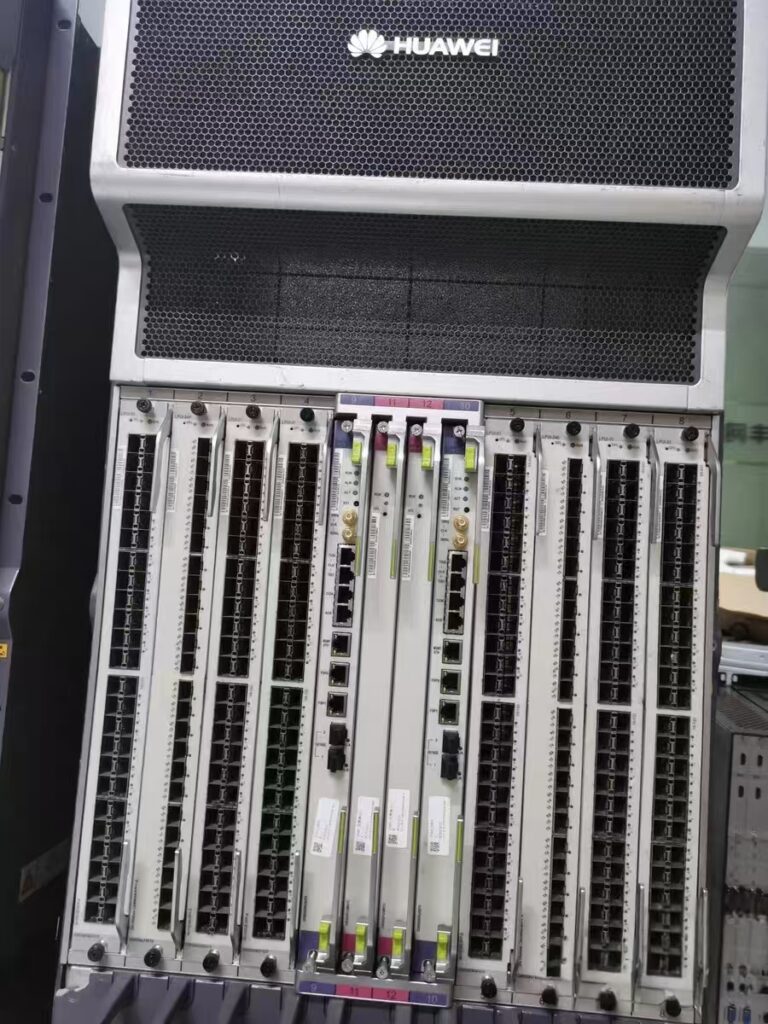
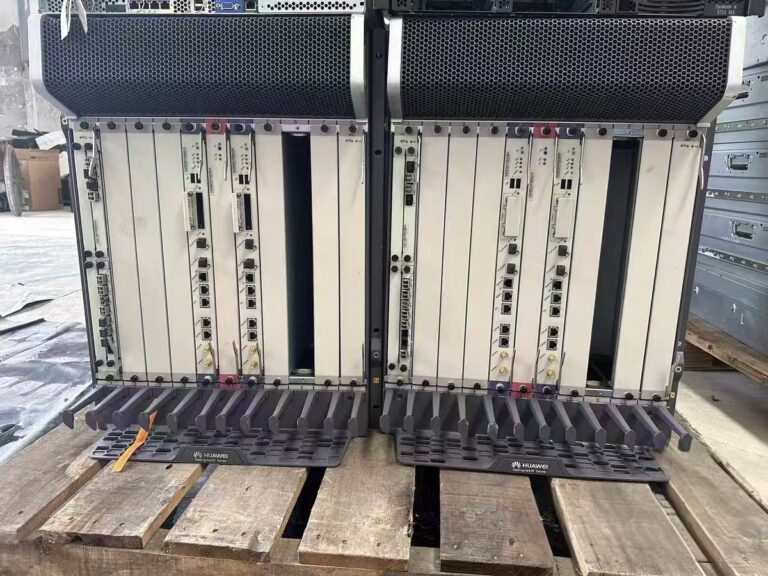
This article explains the difference from a practical telecom spare parts perspective, especially for buyers who need to identify router boards, switch cards, optical modules, line cards, and related network equipment.
What Does a Switch Do?
A switch is mainly used to connect devices inside a local area network, also called a LAN.
Common devices connected to a switch include:
- Computers
- Servers
- IP phones
- CCTV cameras
- Base station equipment
- Transmission equipment
- Network management devices
A normal Ethernet switch works mainly at Layer 2, the Data Link Layer of the OSI model. It learns the MAC addresses of connected devices and builds a MAC address table. When an Ethernet frame arrives, the switch checks the destination MAC address and forwards the frame to the correct port.
This is different from an old hub. A hub repeats traffic to all ports, while a switch forwards traffic more intelligently.
Key Functions of a Switch
| Item | Meaning |
|---|---|
| MAC address learning | The switch learns which device is connected to which port |
| VLAN support | The switch can separate traffic into different Layer 2 networks |
| Port speed | Common speeds include 1G, 10G, 25G, 40G, and 100G |
| SFP/SFP+ support | The switch may support optical modules for fiber connections |
| PoE support | Some switches can power IP phones, cameras, or wireless access points |
| Management function | Managed switches support VLAN, port control, monitoring, and security settings |
When Do You Need a Switch?
You usually need a switch when your goal is to connect multiple devices inside the same local network.
Examples:
- Adding more Ethernet ports in a small office
- Connecting servers in a data center
- Connecting cameras in a surveillance system
- Connecting telecom devices inside a site room
- Building VLAN-based separation for different departments or services
For spare parts purchasing, it is not enough to say “I need a switch.” The exact model number, part number, port type, port speed, software version, license, and test status may all matter.
What Does a Router Do?
A router is mainly used to connect different IP networks.
A router reads the destination IP address of a packet, checks its routing table, and decides the next hop. A router works mainly at Layer 3, the Network Layer of the OSI model.
Common router use cases include:
- Connecting a LAN to the internet
- Connecting branch offices to headquarters
- Connecting telecom access networks to metro or backbone networks
- Supporting VPN connections
- Running routing protocols such as OSPF, BGP, IS-IS, or RIP
- Applying access control policies between different networks
Key Functions of a Router
| Item | Meaning |
|---|---|
| Routing table | The router uses it to decide where packets should go |
| WAN interface | The router may support fiber, copper, E1, serial, or other uplink types |
| Static routing | Routes are manually configured |
| Dynamic routing | Routes are learned through protocols such as OSPF, BGP, or IS-IS |
| NAT | Some routers translate private IP addresses to public IP addresses |
| VPN | Some routers support secure tunnels between networks |
| ACL/security policy | Some routers can control which traffic is allowed or blocked |
| Redundancy | Carrier and enterprise routers may support dual power, fan trays, and control boards |
When Do You Need a Router?
You usually need a router when traffic must move from one network to another.
Examples:
- A company LAN needs internet access
- A branch office needs to connect to headquarters
- A telecom site needs uplink routing
- A customer needs BGP or OSPF support
- Different IP networks need controlled communication
- A VPN tunnel is required
For telecom spare parts, a router may look complete from the outside but still be unsuitable if it lacks the correct interface card, software feature, license, power module, or control board.
Router vs Switch: Main Technical Differences
| Comparison Point | Switch | Router |
|---|---|---|
| Main role | Connects devices inside one local network | Connects different networks |
| Main OSI layer | Layer 2 | Layer 3 |
| Main address used | MAC address | IP address |
| Main table | MAC address table | Routing table |
| Data unit | Ethernet frame | IP packet |
| Broadcast behavior | Broadcasts stay inside the VLAN | Routers do not forward Layer 2 broadcast frames between different networks by default |
| Common use | LAN access, VLAN, port expansion | WAN, internet access, VPN, routing |
| Typical spare parts | Switch board, Ethernet card, SFP port module | Router board, routing engine, WAN card, interface module |
The simplest way to remember the difference is:
Switch = inside the network
Router = between networks
Frames vs Packets
A switch mainly handles Ethernet frames.
A router mainly handles IP packets.
An Ethernet frame contains source and destination MAC addresses. A switch uses these MAC addresses to forward the frame inside the same Layer 2 network.
An IP packet contains source and destination IP addresses. A router uses the destination IP address and routing table to forward the packet to another network.
This distinction is important when testing spare parts. A switch test should not only check power-on status. It should also check ports, SFP recognition, VLAN behavior, and management access when possible. A router test should check boot status, interface cards, routing functions, licenses, fan status, power modules, and software version when required.
What Is a Layer 3 Switch?
A Layer 3 switch is a switch with routing capability.
It can perform normal Layer 2 switching and also route traffic between different VLANs. For example, it can route traffic between VLAN 10 and VLAN 20 inside a campus or enterprise network.
Layer 3 switches are common in:
- Campus networks
- Enterprise LAN core networks
- Data centers
- Telecom access or aggregation scenarios
However, a Layer 3 switch is not always a full replacement for a router.
Depending on the model and network role, routers may support more WAN interface types, NAT, VPN, MPLS, larger routing tables, and more advanced routing policies. A Layer 3 switch is often strong for high-speed internal LAN routing, while a router is usually better for WAN edge, internet access, VPN, and carrier routing scenarios.
How to Choose Between a Router and a Switch
| Requirement | Recommended Device |
|---|---|
| Need more LAN ports | Switch |
| Need to connect computers, cameras, or servers in one LAN | Switch |
| Need VLAN separation | Managed switch |
| Need routing between VLANs | Layer 3 switch or router |
| Need internet access | Router |
| Need VPN | Router |
| Need BGP, OSPF, or IS-IS routing | Router or Layer 3 switch, depending on scale and model |
| Need carrier backbone routing | Carrier-grade router |
| Need many high-speed LAN ports plus internal routing | Layer 3 switch |
The correct choice depends on the network role, not just the number of ports.
A device with many ports is not always a switch. A device with fewer ports is not always a router. The key is what the device needs to do in the network.
Why This Matters in Telecom Spare Parts Purchasing
In telecom spare parts trading, router and switch confusion can cause serious problems.
A buyer may send a PN code for a board that looks like an Ethernet card, but the actual function may be routing, switching, transmission, management, or service processing. Two boards may belong to the same chassis family but support different functions.
Before quoting or purchasing, buyers should confirm:
- Brand
- Model number
- Part number / PN
- Hardware version
- Software version
- License requirement
- Port type
- Port speed
- SFP or optical module compatibility
- Application scenario
- Test requirement
- Warranty requirement
For example, a customer may ask for a “switch board,” but the actual network requires Layer 3 routing between VLANs. Supplying a basic Layer 2 board may look correct physically, but the service may fail after installation.
Another customer may ask for a “router,” but the project may only need a managed Ethernet switch with VLAN support. In that case, buying a router may increase cost without solving the real problem.
What Should Be Tested Before Shipment?
For used, refurbished, or spare telecom equipment, testing should match the real function of the device.
Switch Testing Checklist
- Power-on status
- Boot status
- Management access
- Port link status
- SFP/SFP+ recognition
- VLAN configuration support
- Port speed negotiation
- Basic traffic forwarding
- Fan and power status
- Physical condition and label check
Router Testing Checklist
- Power-on status
- Boot status
- Management access
- Interface card recognition
- Routing table function
- Static routing test
- Dynamic routing support if required
- License status if required
- Software version
- Fan and power status
- Physical condition and label check
A simple power-on test is not enough for many telecom projects. The test scope should match the customer’s real network requirement.
Information Buyers Should Provide Before Quotation
To avoid wrong quotation or wrong delivery, buyers should provide as much information as possible.
Useful information includes:
- Required model number
- Part number / PN
- Quantity
- Photos of the current device or board
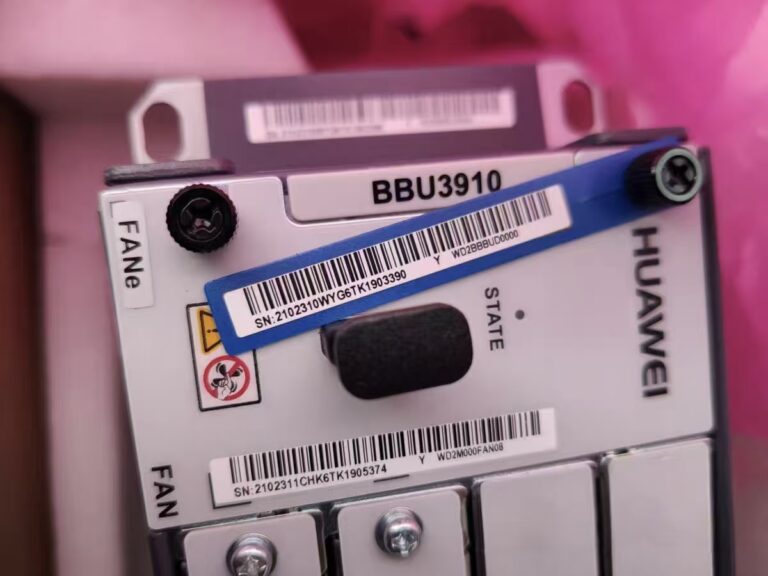
- Label photos
- Software version requirement
- Port type and port speed
- SFP or optical module requirement
- Network application
- New, used, or refurbished condition requirement
- Warranty requirement
- Delivery deadline
If the customer is not sure whether the item is a router, switch, line card, or optical transmission module, photos and PN codes are very helpful for technical confirmation.
Common Buying Mistakes
1. Buying by Appearance Only
Routers and switches may look similar. Some boards may have similar ports but different functions. Always check the exact model and PN.
2. Ignoring Software Version
Some telecom equipment depends on software version or feature license. A device may power on normally but still fail to support the required function.
3. Ignoring Port Type
Copper ports, fiber ports, SFP, SFP+, QSFP, E1, and other interfaces are not interchangeable. The port type must match the live network.
4. Ignoring License Requirements
Some routing, VPN, security, or advanced switching functions may require licenses. This should be checked before purchase.
5. Accepting Only a Power-On Test
A power-on test only proves that the device can start. It does not prove that all ports, routing functions, VLAN functions, or licenses are working.
Practical Conclusion
A switch connects devices inside one local network. A router connects different networks. A Layer 3 switch can route traffic, but it is not always the same as a router.
For telecom spare parts purchasing, the safest method is to confirm the exact PN code, model, function, software version, license, interface type, test scope, and warranty before placing an order.
If you are not sure whether your required part is a router, switch, line card, optical module, or transmission spare part, please send the model number, PN, label photos, and application details. A technical check before quotation can help avoid wrong orders and project delays.