
Huawei OSN 8800 vs OSN 9800: Platform and Sourcing Differences
Huawei OSN 8800 and OSN 9800 are two important optical transport product families used in backbone, metro and aggregation networks.
In our daily telecom spare parts business, we regularly receive RFQs for OSN 8800 and OSN 9800 equipment. Some inquiries are for one or two replacement boards, while others contain large lists of subracks, service boards, cross-connect boards, control boards, optical modules and accessories.
However, an inquiry that simply says “OSN 8800” or “OSN 9800” is usually not enough for an accurate quotation.
These are platform families rather than single fixed devices. Different subracks, board versions, software releases and network configurations may not be interchangeable.
This article explains the main differences between Huawei OSN 8800 and OSN 9800 and highlights the sourcing issues buyers should consider in the secondary telecom equipment market.
Quick Comparison: Huawei OSN 8800 vs OSN 9800
| Comparison | Huawei OSN 8800 | Huawei OSN 9800 |
|---|---|---|
| Product positioning | Large-capacity OTN/WDM platform for backbone and metro networks | Newer high-capacity OTN/WDM and optical cross-connect product family |
| Common platform types | T16, T32 and T64 | U Series, M Series and P Series |
| Typical applications | National backbone, regional backbone and metro networks | Backbone, metro, aggregation, access and data center interconnect, depending on the series |
| Technology focus | OTN grooming, ROADM, ASON, SDH, packet and 40G/100G transmission | Higher-capacity OTN, 200G/400G evolution, optical-electrical convergence and OXC |
| Secondary-market availability | More established installed base and generally more secondary-market circulation | Newer platform; some equipment and boards remain difficult or expensive to source |
| Board compatibility | Depends on subrack, board version and software release | Depends heavily on U, M or P platform, subrack and software release |
| Sourcing risk | Wrong board version, incomplete chassis or old-condition equipment | Confusing different OSN 9800 families or assuming that similarly named boards are interchangeable |
The table provides a general comparison only. The exact configuration must always be checked against the specific subrack, board description and software environment.
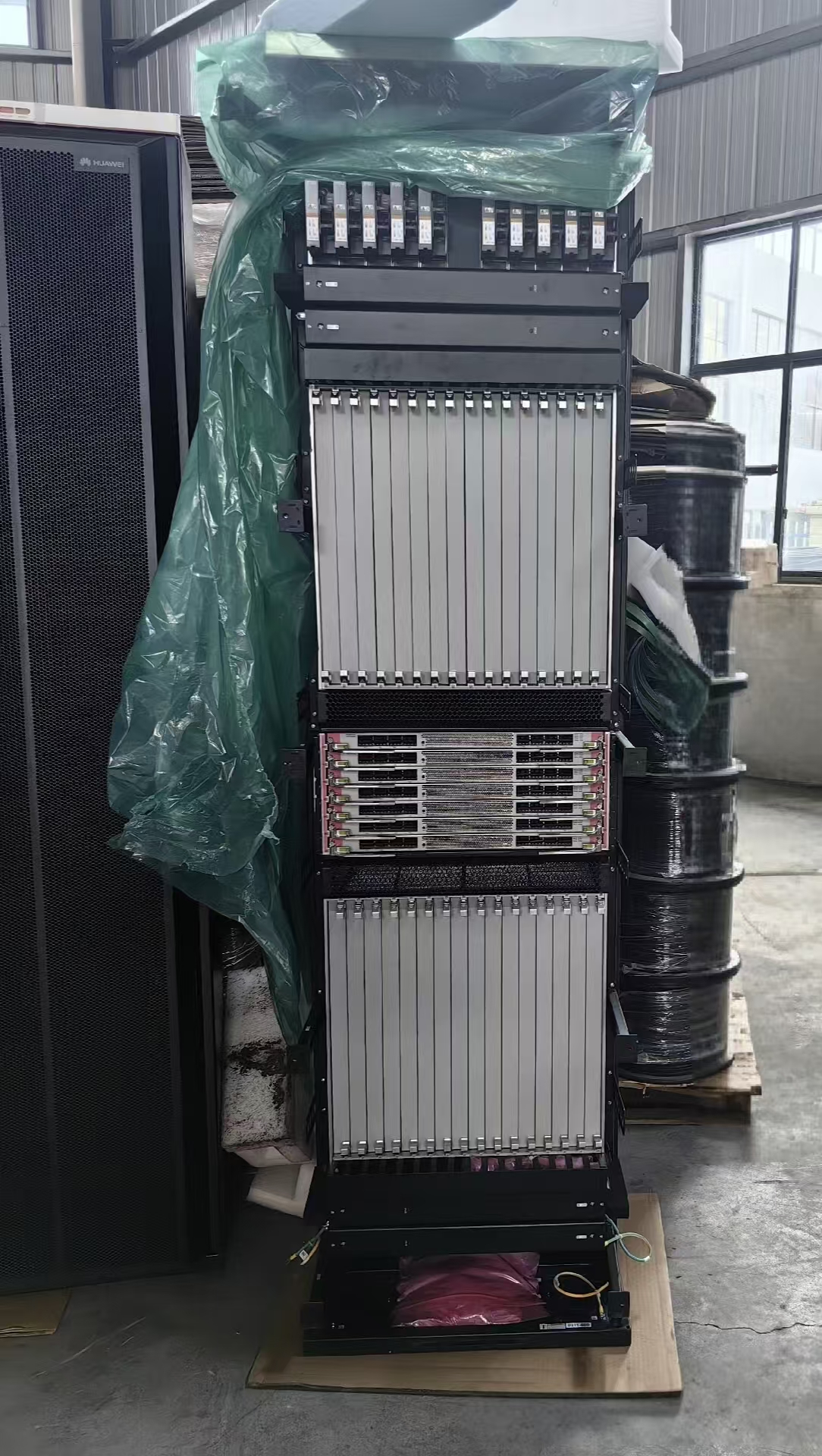
What Is Huawei OptiX OSN 8800?
According to Huawei, the OptiX OSN 8800 is primarily deployed in national backbone, regional or provincial backbone and metro networks.
The platform integrates technologies and functions such as:
- OTN service grooming
- ROADM
- Electrical cross-connection
- Optical and electrical ASON
- SDH and packet service support
- 40G and 100G transmission
- Network protection and management
- Optical performance monitoring
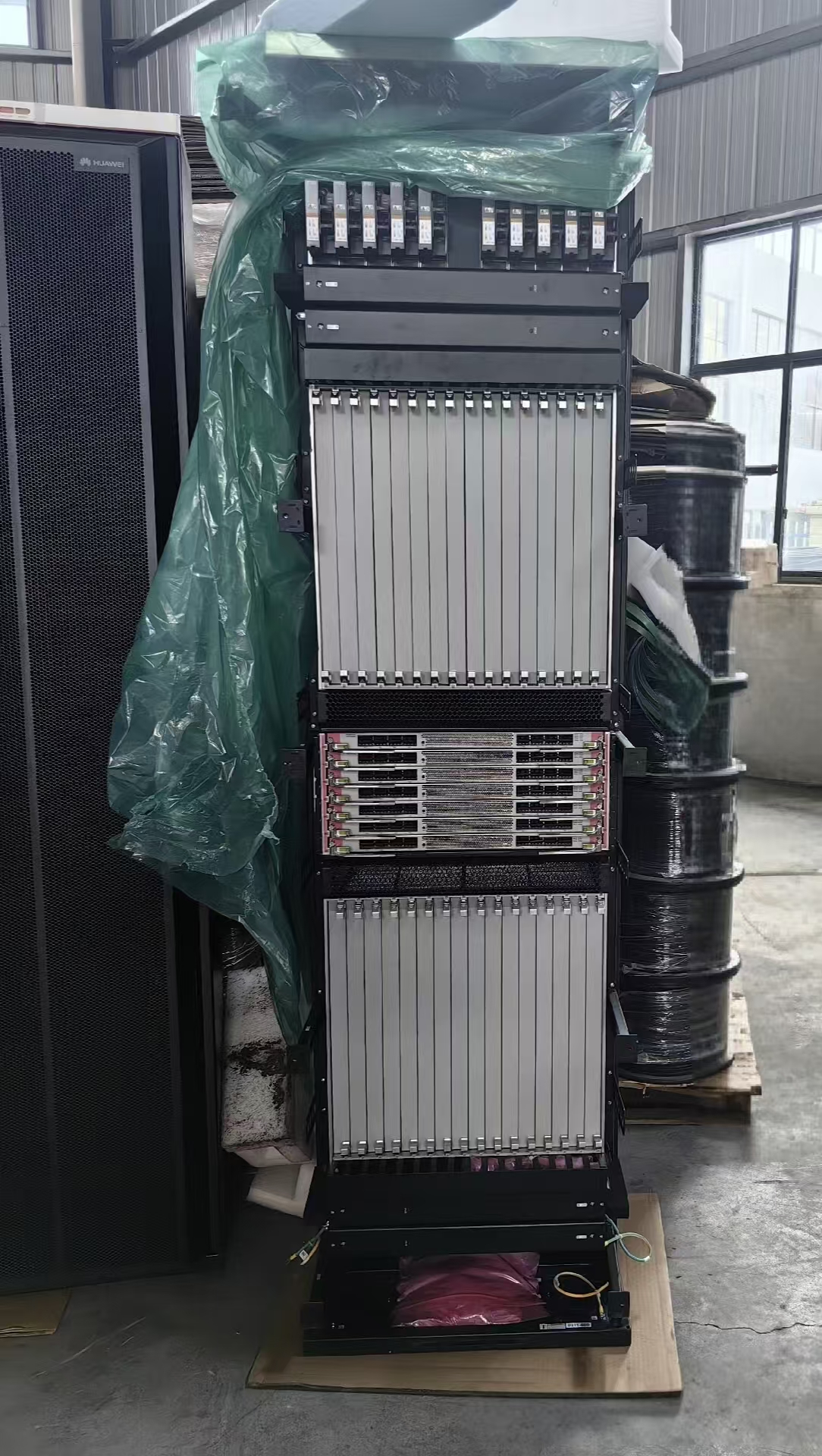
Common OSN 8800 platform variants include:
- OptiX OSN 8800 T16
- OptiX OSN 8800 T32
- OptiX OSN 8800 T64
Huawei states that OSN 8800 T16, T32 and T64 products can be used together to form an end-to-end OTN network. They may also operate with other Huawei optical transmission platforms, including OSN 1800 and OSN 9800.
This does not mean that every OSN 8800 board can be installed in every subrack. Board support still depends on the platform, slot type, hardware version and software release.
Huawei provides version-specific hardware descriptions and board datasheets through its OSN 8800 support documentation.
What Is Huawei OptiX OSN 9800?
Huawei describes the OSN 9800 as a newer generation of large-capacity optical transport products.
One important sourcing point is that “OSN 9800” does not refer to one single chassis. The family includes several product lines designed for different network positions and applications.
Huawei OSN 9800 U Series
The OSN 9800 U Series includes platforms such as:
- OSN 9800 U32
- OSN 9800 U64
- Central cluster chassis
Huawei positions the U Series as a high-capacity OTN platform for 100G, 200G and 400G networks, with future evolution toward higher rates.
It supports services including Ethernet, OTN, SDH, storage and video and integrates technologies such as ROADM, ASON, packet switching and clock transmission.
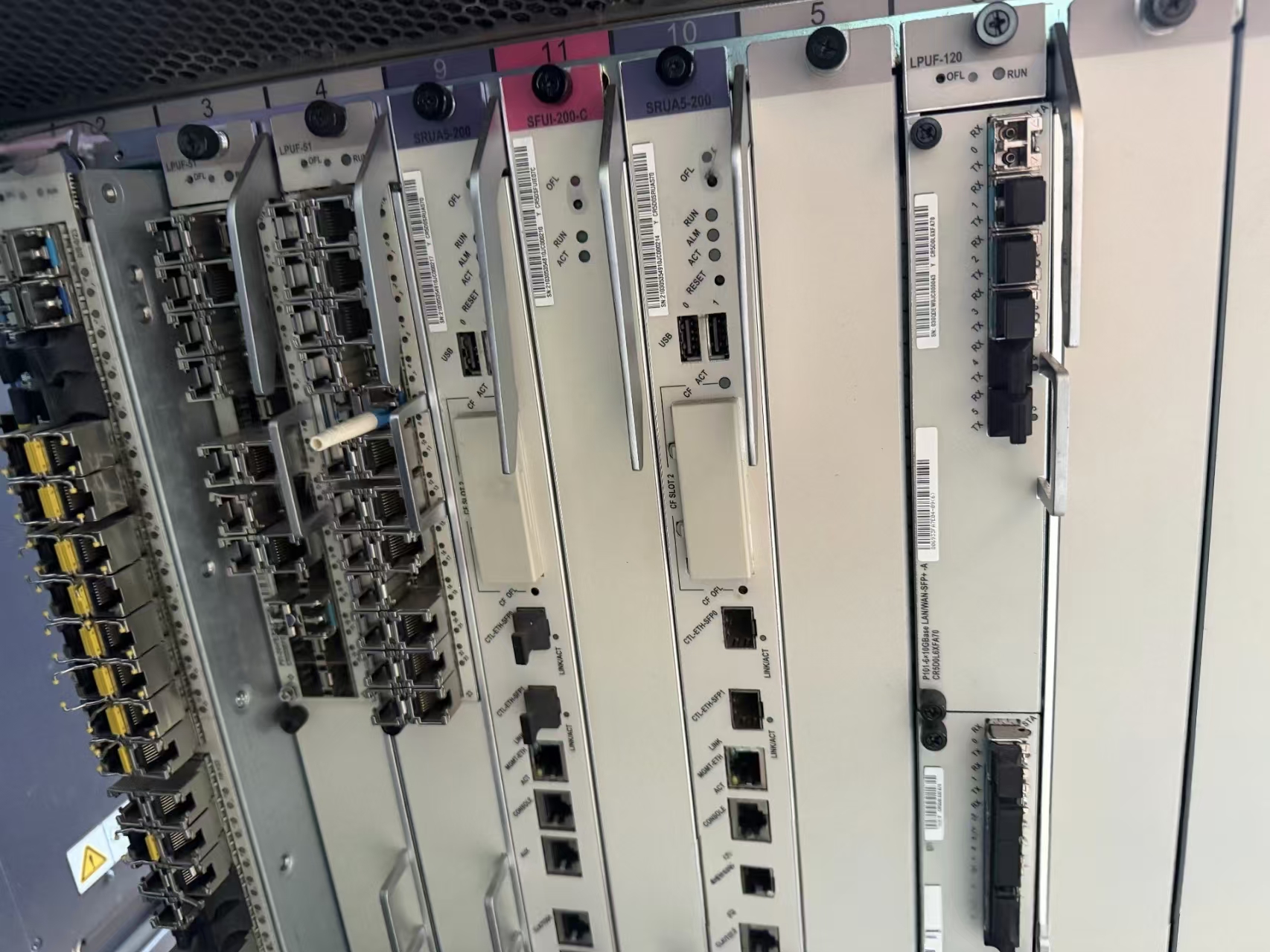
Huawei OSN 9800 M Series
The OSN 9800 M Series includes compact chassis options such as:
- OSN 9800 M05
- OSN 9800 M12
- OSN 9800 M24
The M Series combines optical and electrical boards on a unified platform. Depending on the configuration, it can be deployed in backbone, aggregation, metro, access, mobile backhaul, enterprise private-line and data center interconnect applications.
The smaller physical size of the M Series makes it suitable for sites where equipment-room space and power resources are limited.
Huawei OSN 9800 P Series
The OSN 9800 P Series is focused on optical cross-connect applications.
The OSN 9800 P32 is designed for backbone and metro ROADM nodes. It uses optical backplane and OXC technologies to simplify optical-layer connections and provide high-capacity optical grooming.
Therefore, an OSN 9800 P32 requirement is very different from an OSN 9800 M05 or U32 requirement.
Is OSN 9800 a Direct Replacement for OSN 8800?
Not automatically.
OSN 9800 is generally a newer and higher-capacity product family, but buyers should not assume that it can directly replace an OSN 8800 chassis or board without network planning.
Compatibility may depend on:
- Existing network architecture
- Service type and interface
- Required transmission rate
- OTN and WDM configuration
- Optical-layer design
- Network management system
- Software release
- Existing board and subrack configuration
- Power and cabinet conditions
- Fiber connections
- Protection architecture
If the purpose is to replace one failed board in an existing OSN 8800 system, purchasing an OSN 9800 product may not solve the problem.
For maintenance projects, finding the exact compatible OSN 8800 board may be more practical than migrating the complete site to OSN 9800.
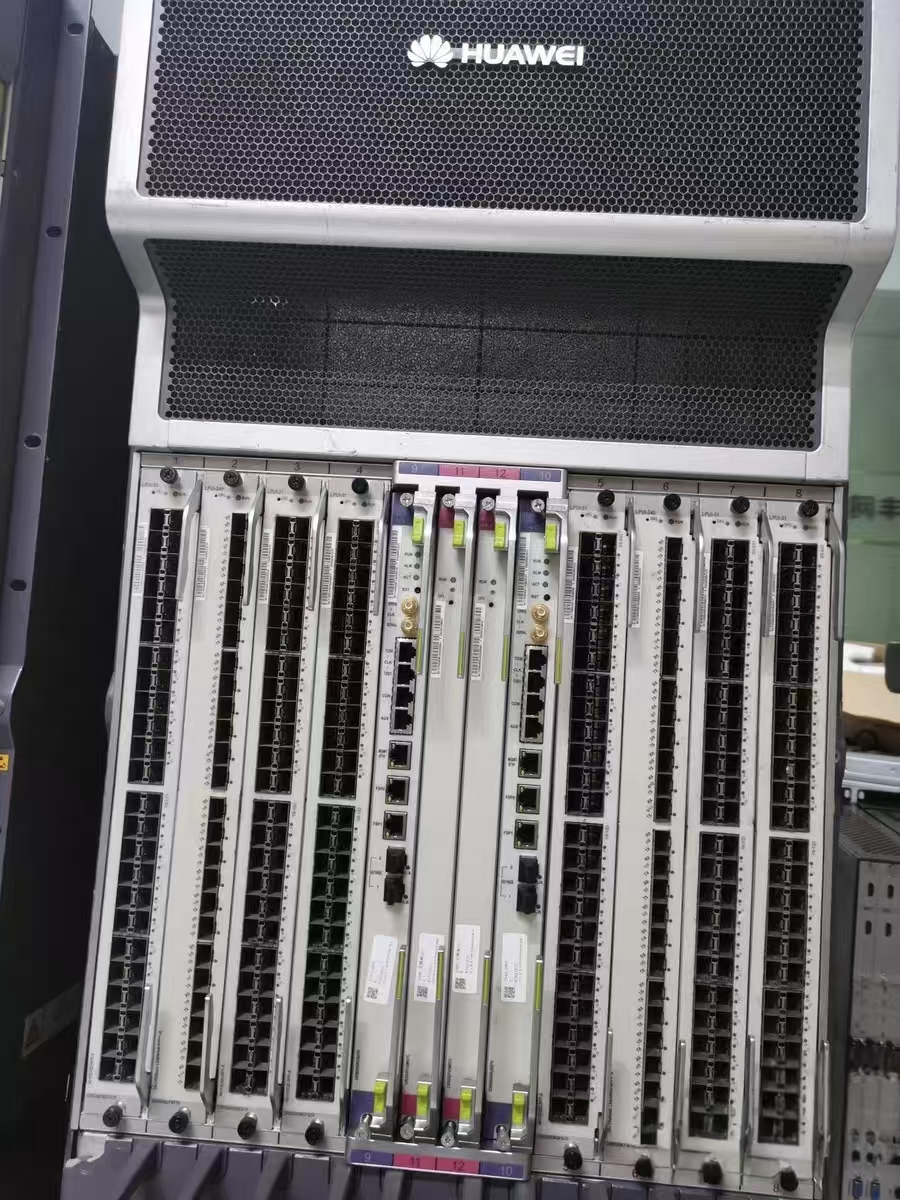
Our Secondary-Market Sourcing Insight
From our experience sourcing Huawei optical transmission equipment in China’s secondary telecom market, OSN inquiries are often more complicated than RRU or ordinary baseband board inquiries.
An RRU buyer may need one clearly identified outdoor radio unit. An OSN buyer may need a working combination of many components.
A complete requirement may include:
- Subrack or chassis
- System control and communication boards
- Cross-connect boards
- Optical line boards
- Client-side service boards
- Optical amplifier boards
- Multiplexer and demultiplexer units
- OSC boards
- Power modules
- Fan units
- Optical modules
- Fiber jumpers
- Cabinets and installation accessories
- Software and license requirements
This is why the word “complete” must be clearly defined in every OSN quotation.
One supplier may quote only an empty subrack. Another may quote a subrack with control and power boards. A third supplier may provide a configured system with service boards and optical components.
All three quotations may use the same product name, but they are not commercially equivalent.
OSN 8800 Availability in the Secondary Market
Based on our sourcing work, OSN 8800 has a more established secondary-market presence because it has been deployed for many years.
It is sometimes possible to source:
- Used complete subracks
- Individual service boards
- Cross-connect boards
- Control boards
- Power modules
- Fan units
- Optical amplifier boards
- Project-surplus equipment
- Equipment removed during network upgrades
However, this does not mean every OSN 8800 board is readily available.
Some boards may still be installed in active networks. Certain versions may appear only when a suitable dismantling or network-upgrade project becomes available. Large quantities may need to be collected from several sources.
In addition, older equipment requires careful inspection for:
- Dust and contamination
- Corrosion
- Damaged optical interfaces
- Bent connectors
- Missing panels or screws
- Fan condition
- Power-module condition
- Previous repairs
- Incomplete labels
- Long-term storage damage
OSN 9800 Availability in the Secondary Market
OSN 9800 equipment is generally newer than OSN 8800. From our market observation, many OSN 9800 units and boards are still installed in active networks, so dismantled supply can be more limited.
This can lead to:
- Higher sourcing prices
- Longer lead times
- Limited quantities
- More project-based availability
- Fewer complete configurations
- Difficulty finding an exact board version
- Dependence on specific partner channels
The sourcing situation also differs between the OSN 9800 U, M and P families.
For example, finding an OSN 9800 M05 subrack does not help a buyer who requires an OSN 9800 U32 board. The complete model and board information must be confirmed before searching begins.
This market observation is based on our secondary-market sourcing experience and should not be interpreted as Huawei’s official availability statement. Actual supply changes from project to project.
Why Large-Quantity OSN Orders Are Difficult
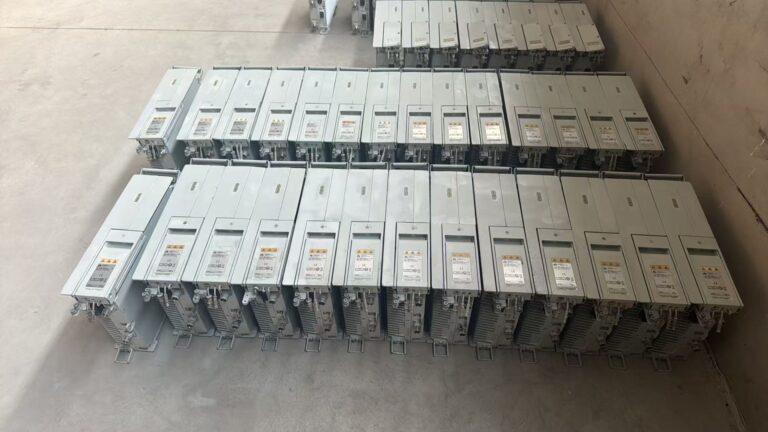
We frequently receive RFQs containing large quantities of Huawei OSN equipment and boards.
A buyer may request dozens or even hundreds of units under one model description. However, the market rarely has the full quantity available from one source at the same time.
Large-quantity orders can be challenging because:
- Equipment must be collected from multiple projects or suppliers.
- Hardware versions may differ.
- Some units may fail visual inspection or testing.
- Serial labels may be missing or damaged.
- Prices may increase as market stock becomes limited.
- Accessories may need to be sourced separately.
- Complete testing requires the correct chassis and test environment.
- Some boards may look similar but support different functions.
- Different batches may have different production dates.
- Delivery time depends on the actual collection and inspection results.
For this reason, a realistic quotation should distinguish between:
- Physical stock already inspected
- Partner stock waiting for verification
- Equipment requiring market collection
- Quantity that cannot yet be guaranteed
A quotation should not be treated as proof that the full quantity is physically available.
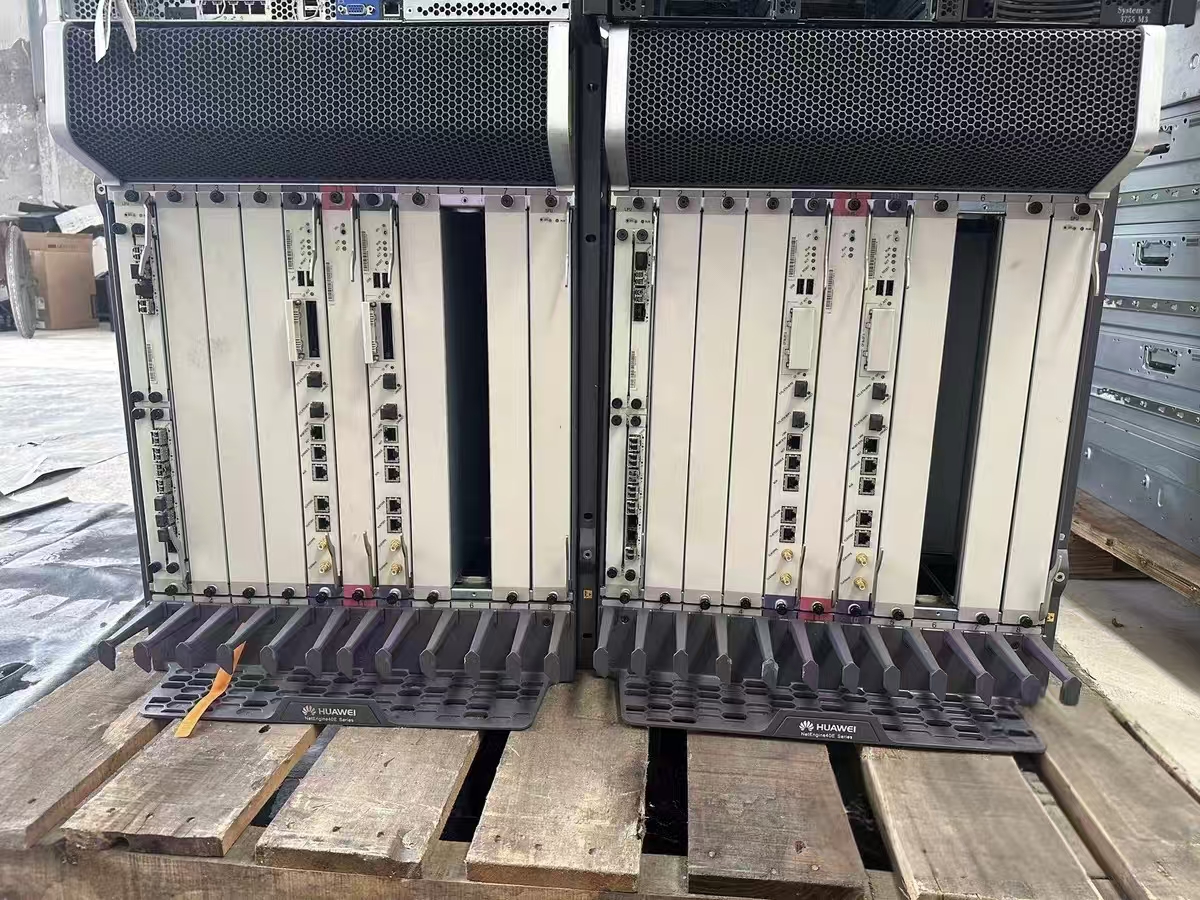
OSN Board Compatibility Must Be Confirmed
One of the biggest risks when purchasing used OSN equipment is assuming that boards with similar names are interchangeable.
Before confirming an order, buyers should check:
- Full board name
- Huawei part number
- Board description
- Hardware version
- Applicable subrack
- Supported slot
- Required software version
- Interface type
- Client-side service rate
- Line-side transmission rate
- Optical-module requirements
Huawei’s support portal publishes product documentation for different OSN 9800 releases, including hardware descriptions and board datasheets. Buyers should verify the proposed board against the documentation for their actual network release.
A board that physically fits into a slot is not necessarily supported by the system software or network configuration.
Complete Chassis vs Empty Subrack
This is another frequent source of misunderstanding.
When a buyer asks for an “OSN 8800 chassis” or “OSN 9800 chassis,” the supplier needs to know whether the requirement is for:
- Empty subrack only
- Subrack with backplane
- Subrack with fan units
- Subrack with power modules
- Subrack with control boards
- Subrack with cross-connect boards
- Fully configured equipment
- Complete cabinet-level system
The quotation should clearly list every included board and accessory.
Using only the description “one set” is risky unless both parties agree on the exact bill of materials.
Testing Used Huawei OSN Equipment
Testing requirements should be discussed before the order because not every OSN board can be fully tested independently.
Depending on the equipment and available test environment, inspection may include:
- Model and part-number verification
- Serial-label inspection
- Visual-condition inspection
- Connector inspection
- Power-on test
- Board recognition in a compatible subrack
- Alarm-status check
- Optical-port inspection
- Basic service or loop test
- Optical power check
- Fan and power-module check
- Test photos or videos
A simple power-on test is not the same as a complete service test.
For a large order, buyers and suppliers should agree on:
- Which functions will be tested
- Whether every unit or only samples will be tested
- Required test equipment
- Acceptance criteria
- Evidence to be provided
- Treatment of failed units
- Warranty period
Information Required for an Accurate OSN RFQ
To receive a reliable quotation, buyers should provide the following information:
Brand: Huawei
Platform: OSN 8800 / OSN 9800
Exact Subrack: T16 / T32 / T64 / U32 / U64 / M05 / M12 / M24 / P32
Board Name:
Huawei Part Number:
Hardware Version:
Software Version:
Quantity:
Condition: New / Used / Refurbished
Complete Chassis or Board Only:
Required Configuration:
Optical Modules Required:
Accessories Required:
Testing Requirement:
Destination Country:
Required Delivery Time:
If possible, attach:
- Existing board-label photos
- Chassis-slot photos
- Current configuration list
- Network management screenshots
- Huawei bill of materials
- Required inspection standard
This information greatly reduces the risk of receiving the wrong equipment.
Which Platform Should a Buyer Choose?
The answer depends on the project.
OSN 8800 may be more suitable when:
- Maintaining an existing OSN 8800 network
- Replacing a failed OSN 8800 board
- Matching an existing chassis and software release
- Expanding a legacy 40G or 100G environment
- Secondary-market availability and cost are important
OSN 9800 may be more suitable when:
- Building or expanding a higher-capacity network
- Planning for 200G or 400G transmission
- Requiring more compact deployment
- Deploying OXC or newer ROADM architecture
- Supporting newer backbone, metro or DCI applications
- The network has already standardized on OSN 9800
The newer platform is not automatically the correct choice. Compatibility with the installed network is usually more important than product generation.
What Buyers Should Verify Before Payment
Before paying for used or refurbished Huawei OSN equipment, buyers should request:
- Exact model and part-number confirmation
- Complete board and accessory list
- Current photos of the actual goods
- Clear serial-label photos
- Quantity confirmation
- Condition description
- Test scope and acceptance criteria
- Lead-time explanation
- Warranty terms
- Packing method
- Treatment of undelivered or failed units
For large orders, third-party inspection or batch delivery can reduce procurement risk.
Final Thoughts
Huawei OSN 8800 and OSN 9800 are both important optical transport platforms, but they serve different generations, capacities and deployment requirements.
OSN 8800 remains relevant for many existing backbone and metro networks, especially when operators need replacement boards and maintenance spares.
OSN 9800 provides newer, higher-capacity options through its U, M and P product families. However, the name “OSN 9800” alone is not sufficient for purchasing. Buyers must identify the exact product series, subrack, board, hardware version and software environment.
From a secondary-market sourcing perspective, the most important lesson is this:
Do not buy an OSN product based only on the platform name. Buy according to the exact subrack, board part number, hardware version, configuration and test requirement.
Correct identification at the RFQ stage saves more time and money than correcting a compatibility problem after delivery.
Huawei OSN Spare Parts Sourcing Support
Baoding Enken Trading Co., Ltd. supports international buyers with secondary-market telecom spare parts sourcing from China.
Our supply scope includes:
- Huawei OSN 8800 and OSN 9800 equipment
- OTN and WDM boards
- Control and cross-connect boards
- Optical line and client boards
- Optical amplifier boards
- Subracks, power modules and fan units
- Huawei BBU, RRU and AAU
- Huawei OLT, PTN, RTN and DWDM equipment
- ZTE, Ericsson, Nokia and Juniper spare parts
Depending on the product and available test environment, we can support condition confirmation, label photos, quantity verification, functional testing, test videos, third-party inspection and export packing.
Send us the exact model, part number, quantity, required condition, configuration and destination country for availability checking.
Frequently Asked Questions
Is Huawei OSN 9800 better than OSN 8800?
OSN 9800 is a newer and generally higher-capacity product family. However, OSN 8800 may be the correct choice for maintaining or expanding an existing OSN 8800 network.
Can OSN 9800 boards be used in an OSN 8800 chassis?
Buyers should not assume that OSN 9800 and OSN 8800 boards are interchangeable. Compatibility must be checked against the exact subrack, board description, hardware version and software release.
Is OSN 9800 a single product?
No. The OSN 9800 family includes different product lines, including U, M and P Series, with multiple chassis options and different network applications.
Is used OSN 8800 equipment still available?
Some OSN 8800 subracks and boards are available through the secondary market, but availability depends on the exact model, board version, quantity and current dismantling or surplus projects.
Why is OSN 9800 equipment expensive in the secondary market?
OSN 9800 equipment is relatively newer, and many units remain in active networks. Secondary-market supply can therefore be limited, especially for exact board versions or large quantities.
What information is needed for an OSN quotation?
Provide the exact platform, subrack, board name, Huawei part number, hardware version, software version, quantity, condition, configuration, testing requirement and destination country.
Transparency Note: Technical platform descriptions in this article are based on Huawei’s publicly available documentation. Availability, pricing and sourcing observations are based on our practical experience in the secondary telecom equipment market and may change according to actual market supply.